
Last Updated on November 21, 2026
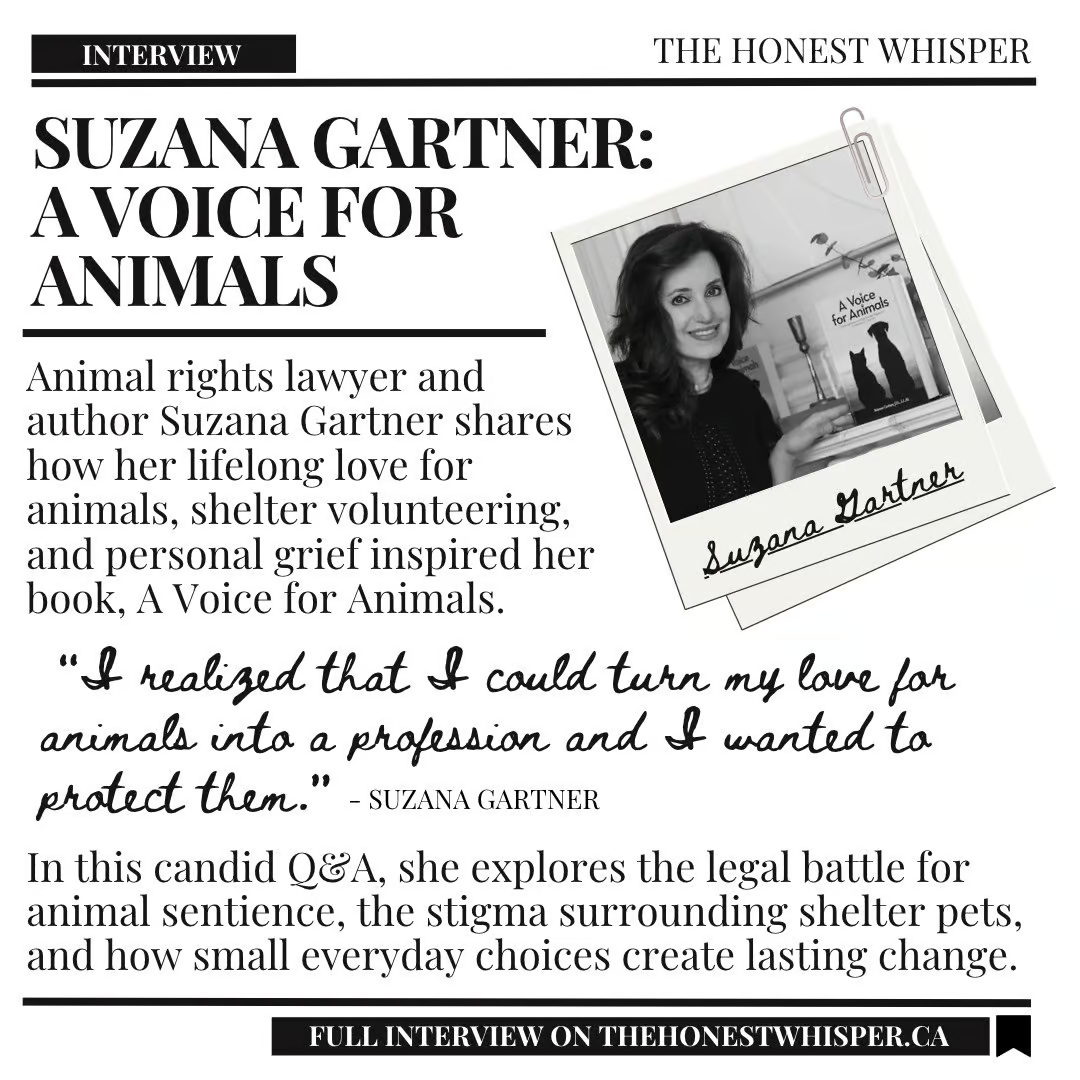
In this in-depth interview, animal rights lawyer, advocate, and author Suzana Gartner discusses her journey from volunteering at municipal shelters to launching an animal rights law firm and writing her book, A Voice for Animals. Gartner breaks down the crucial distinction between animal welfare and animal rights, emphasizing the need for legal systems to recognize animals as sentient beings rather than personal property. Through heartfelt stories about her own companion animals—including her senior rescue dog, Ginger—she challenges common misconceptions about shelter animals, addresses societal disconnects regarding non-human species, and offers actionable advice for everyday advocacy. Finally, Gartner shares her optimism for the future of animal protection and previews her upcoming projects, including a second book, an educational advocacy platform, and street dog rescue efforts in California.

What inspired you to become an animal rights lawyer and advocate, and how has your personal journey shaped the work you do today?
I’ve always loved animals for as long as I can remember and felt a special connection with them. My personal encounters as a child with animals in the neighborhood and with my family companion animals in my life sparked an interest in getting involved as a volunteer at a municipal animal shelter. That experience opened my eyes to their vulnerability as I became aware of the system that was supposed to protect them, the inadequacies of the laws, and how much they rely on us to speak up for them.
My personal experiences with the animals in my life, the volunteer experiences in the shelter system, and my goal to become a lawyer led me to combine those skills to launch an animal rights law firm. I realized that I could turn my love for animals into a profession, and I wanted to protect them.
I think my journey has led me to the work I am doing now as an animal advocate; from defending animals in the legal system shaped the work I do today as an animal advocate focusing on education and awareness on a broader scale to inspire others to have compassion for animals to inspiring others to change the way they see animals, and there’s always something we can do to make their lives better.
Your book, A Voice for Animals: The Social Movement That Provides Dignity and Compassion for Animals, explores the movement for animal rights. What inspired you to write it, and what do you hope readers take away from it?
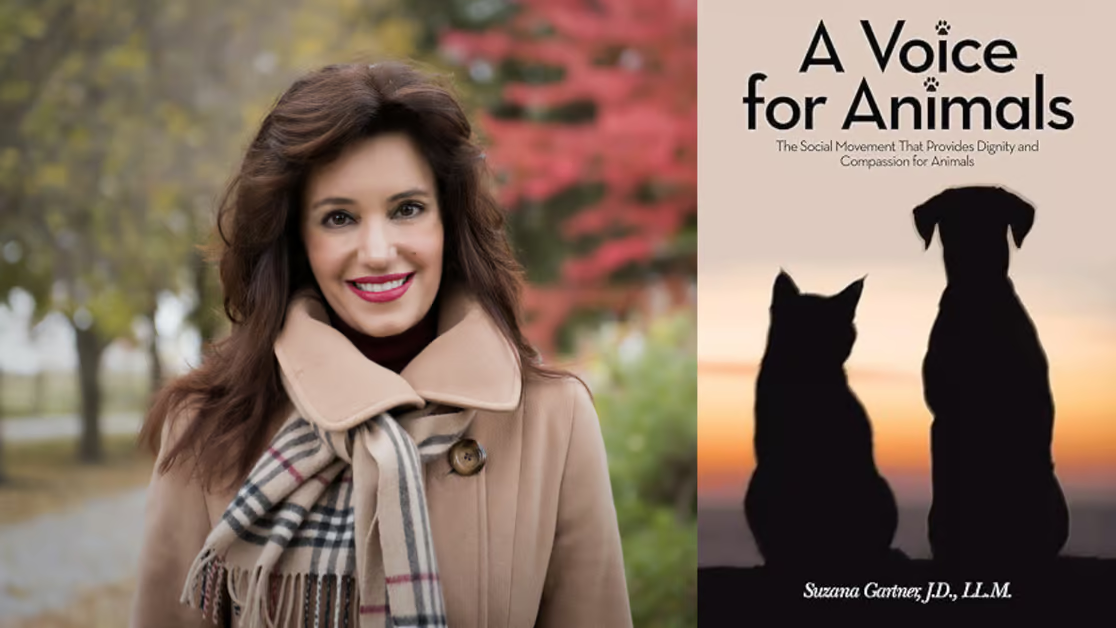
I was motivated to write about shelter animals for years, but it was the passing of my beloved dog, Charlie, that finally inspired me to write A Voice for Animals: The Social Movement Providing Dignity and Compassion for Animals. Writing was cathartic for me and helped me cope with the loss and was a way to process my grief and honour the special bond we shared. During that time, my beloved cat Jackson was diagnosed with cancer, which brought another personal experience with loss.
What started as a way of healing gradually became something much bigger. I was working as an animal rights lawyer and volunteering with shelter animals again. I met many beautiful, loving homeless animals who were sitting in shelters waiting for a second chance to be loved. I started to notice many of the misconceptions surrounding shelter animals and the dichotomy between the way people treat their family dogs and cats and the stigma surrounding homeless animals. It was heartbreaking to realize that people cherish their family companion animals but can turn away from homeless animals, so I started to write. During this process, I combined my personal experiences with animals, my legal background, and my passion for animals to create something meaningful.
I hope readers feel uplifted when they finish reading the book rather than overwhelmed. I want them to understand that animals are individuals, each with their own personalities and feelings, and can form deep and strong connections with humans. I want readers to become empowered to know that they can be part of the solution. You don’t have to change the world to make a difference. You can start small.
Many people love animals but may not fully understand the difference between animal rights and animal welfare. How would you explain this distinction, and why does it matter?
Animal welfare generally focuses on how animals are treated and ensuring that their basic needs are met, including proper food, shelter, veterinary care, and protection from suffering. On the other hand, animal rights go much further in recognizing animals as individuals and not objects to be used for human use.
Animal rights advocates and activists (like me) believe that animals have a right to live amongst humans; they have inherent value and worth, and they are sentient beings with interests of their own. They shouldn’t simply be viewed as property or resources for human use. Their lives matter to them.
It’s important to look beyond simply how they are treated, and although improving the conditions in which animals are kept is a step forward, the real question is whether we should use animals in the first place. It matters because recognizing animals as sentient beings and individuals deserving of dignity, respect, and compassion will improve their lives and the way mainstream society interacts with them.
What are some of the biggest misconceptions people have about animals and their capacity to experience emotions, form relationships, and have individual personalities?
One of the biggest misconceptions is that animals don’t experience the world the way humans do. We see stories on the news in which people are amazed when they read about their intelligence, deep level of emotions, and the attachments they can form with other animals and humans, and give so much love.
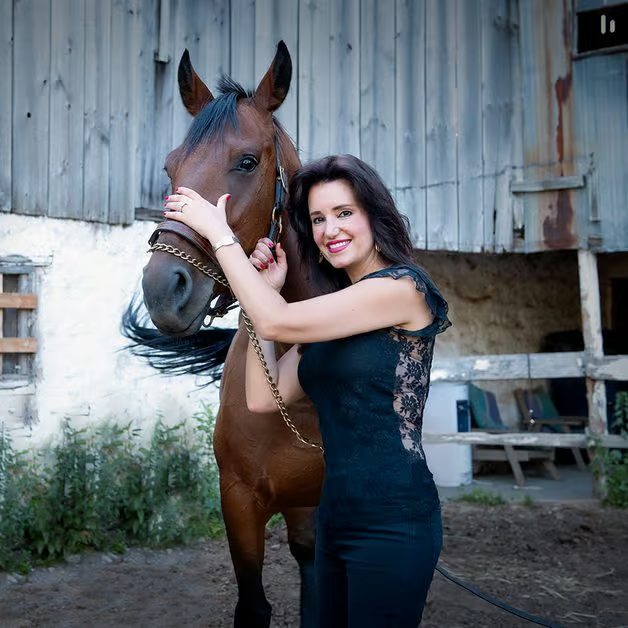
Most of us who have shared our lives with animals know how special they are and can experience so much emotion; they have their own unique personalities and can develop deep bonds with their human guardians. For instance, some animals are playful, some are more serious, some of them are shy, and others are affectionate. They have preferences and show special ways of communicating with us.
I’ve learned so much from animals by spending time at shelters and sanctuaries. When you take the time to get to know them on a personal level, you begin to appreciate just how special they are. It’s an opportunity and a glimpse to see the world through their lenses and recognize the depth of their perceptions and abilities to experience the world. We become aware of their ability to have feelings and emotions that are similar to ours, in their capacity to experience happiness, sadness, love, and loss.
As a lawyer, what do you believe are some of the most important legal changes needed to better recognize and protect the rights of animals?

One of the biggest challenges is that our legal system has historically treated animals as personal property. Although there have been improvements in animal protection legislation, and some jurisdictions have legally codified animals as sentient beings and removed them from the property sections of legislation, there is more work to be done.
We need stronger animal protection laws, including the enforcement, in particular with animal cruelty and neglect, and recognition of animals as sentient beings on a wider scale codified everywhere. In addition to stronger animal protection legislation, passing laws aimed at the prevention of animal suffering and cruelty is vital to progress. In doing so, the legal system is equipped to ensure crimes against animals are taken seriously, they are protected from harm, and there are harsh consequences for hurting them. In addition, the enforceability of these laws to protect animals and the recognition that they are sentient beings, which is codified in the laws, shifts the responsibility of humans to take care of them.
You’ve been actively involved in helping shelter animals find loving homes, including through your book signings. Why is adoption such an important cause to you, and what have these experiences taught you?
Adoption is close to my heart because it literally saves lives and makes room for other animals in need of finding temporary placement. It relieves the shelter and rescue system from the burden and responsibility of taking in animals that are no longer wanted and allows them to take in strays. I’ve met so many wonderful animals in shelters that are simply waiting for a second chance and deserve to find it.
There’s a misconception that there’s something wrong with shelter animals, the stigma of adopting a homeless animal, or that they’re less worthy than animals that are purchased from breeders or online. That is false. Many animals end up in shelters due to unfortunate circumstances through no fault of their own. For instance, families face unexpected challenges, including moving, illness, poverty, aging, or even abandoning animals.
Through my advocacy work over the years and recent book signings, I’ve had the opportunity to reach out to and collaborate with rescues and humane societies to help bring awareness of the wonderful work they do in their communities and to help them in finding homeless animals, loving families, and homes.
These experiences taught me that bringing awareness to people through these book events has been rewarding, as I have been able to bring these organizations and adoptable animals into communities. I have been able to speak to people about the benefit of adoption, that it gives them an opportunity for a new beginning, that there are lovely animals in shelters, and that’s something I will always speak up for.
You adopted your dog Ginger after she had spent approximately two years waiting for a home. Can you share the story of how you met her and what that experience meant to you?
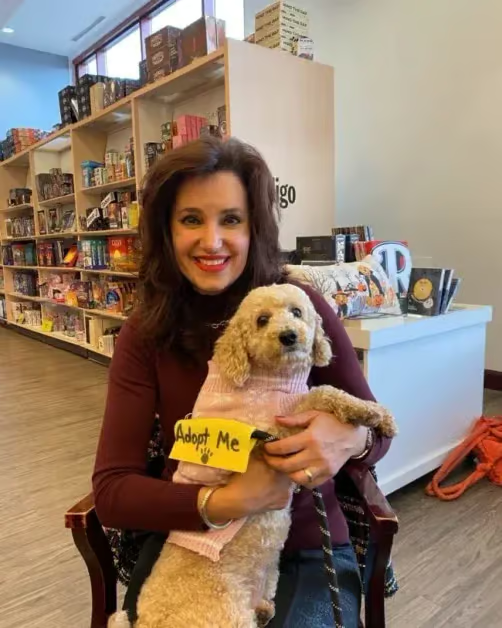
Ginger’s story is meaningful because she had spent approximately two years waiting for a family. When we met her, she was the sweetest dog, and I met her during a book signing event at Indigo in London. I collaborated with a local rescue, SALT, and they brought Ginger to the store in the hope of adopting her. She was wearing a yellow sign that said, “ADOPT ME”; people stopped by to greet her and seemed interested, but no one applied to adopt her. I wondered if it was her age, as she was seven years old.
It’s been lovely getting to know Ginger, and it’s been an incredibly meaningful experience. Ginger is a trusting, patient, and friendly dog. And most people are surprised to learn that she’s from a rescue because of her poodle breed and friendly temperament. When you cuddle with her, she makes adorable little moaning sounds. She loves music, and whenever she hears it, she’ll start wagging her tail.
Sharing our lives with Ginger has reminded me how much love animals have to give; even after spending so much time waiting for a home, she’s so happy and calm. I’m so grateful she is part of our family.
Her story is also a reminder that there are so many wonderful animals in shelters and rescues waiting for a second chance. I really hope that more people will consider adoption, as they will see the rewards.
What do you believe are the biggest obstacles preventing society from extending greater compassion and legal recognition to animals?
I think one of the biggest obstacles preventing society from extending greater compassion for animals and legal recognition of them as sentient beings is that attitudes toward animals are ingrained from an early age. As people grow up with certain traditions or family expectations, they don’t question what they learned as children or stop to think about how the decisions they make affect animals’ lives.
There’s also a disconnection between how much people love their companion animals and how they view other animals. We can recognize the personality and individuality of our beloved dog or cat in our home, but sometimes fail to extend that same understanding to farm animals, wildlife, or other species.
Education and awareness of their plight are the key, so when people have the opportunity to meet animals and understand their experiences, their perspectives can begin to change and with greater empathy.
We need to implement stronger laws, focus on broader awareness, and understand that practices that harm animals are not socially accepted. Change takes time, but it begins with awareness and empathy.
Some people feel overwhelmed by the scale of animal exploitation or believe their individual actions won’t make a difference. What would you say to someone who wants to help but doesn’t know where to begin?
Yes, I understand that some people become overwhelmed and even turn away, as it can seem massive. I try to encourage people to educate themselves, and they can start somewhere small as individuals. You don’t have to take on the entire animal rights movement or think you have to solve everything; pick a cause that resonates with you. Choose something that you are passionate about. You can volunteer at a local shelter, adopt an animal, foster an animal, support a rescue organization, including farm sanctuaries or wildlife centers, and start by educating yourself about an issue that you feel captures your heart.
You can also make more mindful everyday choices in the clothes you wear, the food you eat, and speak up when you see something that isn’t right, and encourage others to be more compassionate to animals.
In my book A Voice for Animals, I’ve included a resource section because I want readers to choose ways to get involved. There are so many organizations doing wonderful work, and they can contribute. Small acts of kindness add up. You don’t have to change the whole world for animals to make a difference. You just have to start with what you can do. I would start with curiosity and educating yourself.
Through your advocacy, writing, and public appearances, have you experienced a particularly memorable moment when you saw someone’s perspective on animals change?
Some of the most meaningful moments happen during conversations with people who come to a book signing or other events and begin sharing their own personal experiences with companion animals. I enjoy talking to them about shelter animals or sharing with them ways to get involved in the cause.
When I meet people who begin questioning me about veganism, I can engage with them in a meaningful way to see farm animals that are traditionally used in our food system as individuals and that their choices matter and to consider trying a vegan diet or plant-based lifestyle, which is memorable.
What gives you hope for the future of animal rights, and are there any developments or changes that you find particularly encouraging?
I am hopeful about the future of animal rights, and there are so many exciting developments happening. It gives me hope that mainstream society is standing up for animals and the legal recognition of animal sentience. To see younger people and generations who care about animal rights and want to participate.
I’m encouraged by the work of rescue organizations, sanctuaries, advocates, activists, politicians who care about animal issues, scientists who are showing us the complexities of animals and their sentience, and all those ordinary everyday individuals who dedicate their time to improving the lives of animals. I see more conversations about animal protection, adoption, and responsibilities we have toward other living beings. There are so many recent developments that are encouraging, including the ban of horse carriages in New York City and sending the horses to sanctuaries, the passage of stronger cruelty laws, the opposition of fur and fur bans taking place, labs that test animals closing down, circuses closing, the commitment to no-kill in animal shelters, the plant-based treaties that are passing in cities to encourage plant-based eating, and so much more progress and compassion for animal rights.
It’s especially encouraging to see younger generations questioning traditional attitudes and asking how we can create a better world for animals. I am very encouraged by the changes happening globally and people are speaking up and there is momentum they are speaking up, and taking action for animals. That gives me hope.
What’s next for you and your advocacy work, and where can readers learn more about your book, upcoming events, and ways to support your mission?

I hope to continue bringing my first book A Voice for Animals to more communities through events, book signings, and opportunities to connect with readers and animal rescue organizations. I’m also passionate about continuing to support shelter animals and continue with collaborations. I would love for the book to reach people who may not have been involved in animal advocacy before.
I am writing a second book, What Animals Teach Humans About Themselves, that I hope to reach a more widespread audience to consider the incredible way animals enrich our lives and how similar and yet different we are from them. I am also launching a new website: avoiceforanimals.com, which will be educational and offer guidance to those people who are interested in advocacy, activities, or learning more about ways to get involved in animal rights. I hope to offer templates, educational online courses, and guidance to those interested in getting involved. I am continuing my rescue work saving street dogs in San Bernardino, California, which is a cause dear to my heart. Recently, we saved three friendly, beautiful dogs that had been living on the streets in the desert for almost a year. One of them desperately needed medical attention. I wish to continue to help rescue street dogs and eventually open an animal sanctuary in California and continue writing and animal advocacy.
Readers can learn more about the book and my advocacy work through my website: suzanagartner.com where they can subscribe to my Substack and follow my social media channels. I hope people will take the opportunity to explore the resources in the book and find their own way to make a difference. If my book encourages even one person to look at animals differently or take action on their behalf, then I’ve accomplished something meaningful. I started writing this book to honour the animals I loved and lost, but along the way, I realized I wanted to do something for all the animals still waiting to be noticed and given a second chance. I hope I can inspire others, even one person or more to want to help animals.
Follow Suzana Gartner on Instagram @suzanagartner
Love this interview? Check out more interviews or submit your own interview!


