
Last Updated on June 2, 2026
Unlearning Self-Rejection: Practising Self-Acceptance as a Feminist
I didn’t start considering myself a feminist for many years. Even now, I have trouble calling myself a feminist, because I’m unsure if I am doing “enough” for the movement to be considered one. I didn’t know much about it growing up, or what was required to be one. I wrote these 7 acts of female resistance for those looking for something they can do in their daily lives. Something that may be considered easy to some, but by adopting or praising these quiet acts empower yourself and other women. As feminists, we are all just doing our best. It is good to remind yourself that doing the best isn’t always a loud act or an extraordinary one, but rather it can also be a simple one.
Many women struggle quietly with hidden habits and societal pressures every day. As I untangled myself from these behaviours, my mission grew. It became about something much bigger. I wanted to explore the messy realities of living as a feminist. This journey requires us to stop fighting our natural selves. Instead, we must find our way back to authentic alignment, nature, and joy.
On the surface, these daily rituals might seem minor or trivial. However, they hold a deep grip on us. Breaking them requires immense internal courage. I challenge you to examine these areas in your own life. Try stepping away from them, even if you think they do not affect you. See what happens when you reclaim that space. Every shift on this list transformed my journey. While number 4 is my personal favourite, the final practice can be the most crucial. I encourage you to read through to the end to discover why.
7 Quiet Acts of Feminist Resistance I’m Choosing for Myself
1. Not Bleaching My Hair
Growing up in Canada, I noticed immense pressure in my community. Like many others, I felt intense pressure to conform to highly specific standards of appearance. These ideals survive because they convince women to view their bodies as endless fixer-upper projects. Achieving these looks requires damaging ourselves. It also forces us to pay a steep financial tax.
The history of these ideals shows just how manufactured they really are. Take blonde hair as an example. It started as a hyper-localized adaptation to grab attention during the Ice Age. Later, 20th-century capitalist media packaged that evolutionary trait into a globalized, multi-billion-dollar beauty industrial complex. Think of old Hollywood casting choices and hair dye commercials. This massive industry profits directly from female insecurity.
Breaking Free from Patriarchal Beauty Standards
This conditioning affected me during high school. I began performing the expected rituals of female presentation. It started with hair highlights. Highlights were often a quiet rite of passage for girls at my school. Some, myself included, even opt for a full chemical bleach with relentless touch-ups at some point.
People constantly told me that this altered look “suited me” or “looked nice.” And I always returned this “compliment” to others for their hair. It seems like a common habit for us to see a physical change in someone as something to be praised. Normally, I always encourage change, but not this kind. This praise became an addictive form of validation. It fed a toxic belief that my natural self was inherently unpresentable. I’m sure it does for everyone else, too.
The pressure trained me to prioritize external approval over my own peace. It convinced me that I had to alter my natural biology to be worthy or likable. Every single day, I coupled heavy chemical treatments with ritually burning my hair straight. This routine caused incredible damage. It harmed my physical health, my mental health, and my capacity for authentic self-determination.
Reclaiming Autonomy and Simplicity
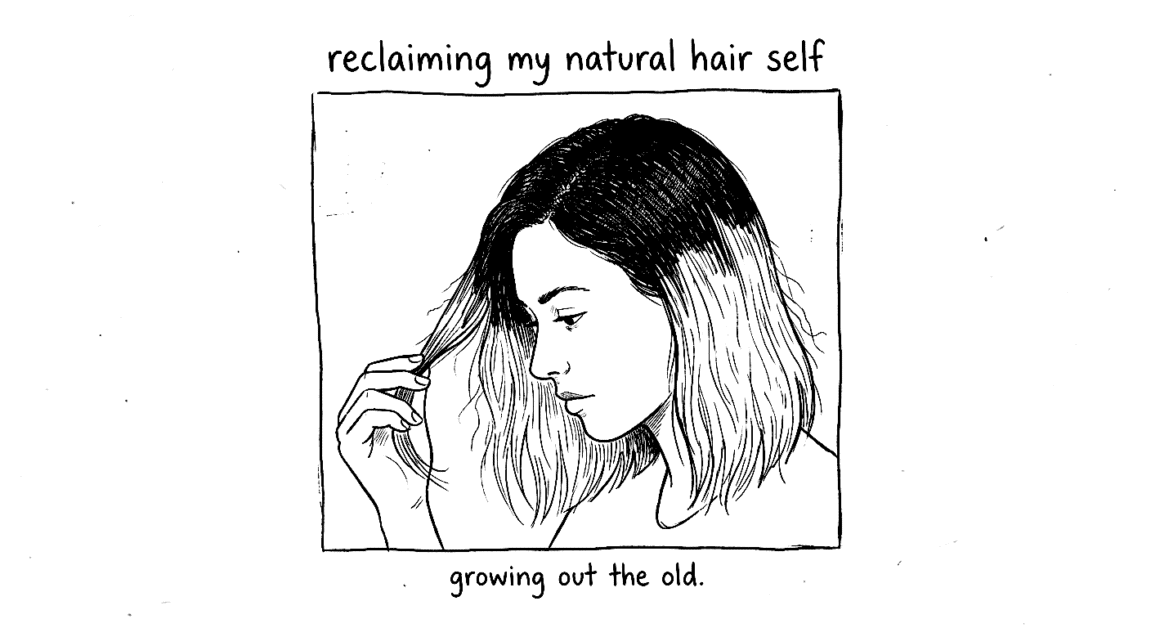
At the time, I did not realize how deeply I internalized these expectations. Today, unlearning them proved to be incredibly hard. I carried that exhausting cycle with me for many years. Finally, about a year ago, I chose to reclaim my bodily autonomy.
Today, I no longer dye or bleach my hair. I stepped away from the constant heat. I even started cutting my hair myself to embrace simplicity, low consumption, and freedom. Rejecting these deeply ingrained patriarchal beauty standards might seem trivial to some. For me, it has been a challenging, radical journey.
Reconnecting with my true hair is a vital act of radical self-acceptance. It is a reclamation of my authentic identity. By stepping off this treadmill, I want to show that we are already enough just the way we are, and that in itself is beautiful. It can be challenging at first, but it forces me to accept myself. Don’t try to be something I’m not and something that I feel is “extraordinary”, because that won’t help me accept my true, authentic, simple self.
Self-Rejection vs. Self-Expression
It is crucial to distinguish between altering our appearance to meet oppressive beauty standards versus changing it for genuine self-expression. The difference lies entirely in the underlying motive: one comes from a place of societal compliance (fixing a perceived “flaw” to fit in), while the other stems from creative freedom (celebrating who you are).
While I haven’t yet explored ways to playfully express myself through my hair—such as experimenting with vivid colors or unconventional cuts—I am excited to shift my relationship with it. Moving forward, my hair goals are no longer about fixing something to gain external approval, but about treating my appearance as a canvas for authentic joy.
We do not need to manipulate our bodies to be deemed acceptable. Divesting from these artificial demands allows us to reclaim our autonomy. Ultimately, it means we can redirect our valuable time, money, and energy away from corporate profit and pour those resources directly into the advocacy, compassion, and grassroots causes we are truly passionate about.
2. Eating What I Want
This reclamation of my autonomy went far beyond my appearance. It fundamentally transformed how I related to food, appetite, and my physical body. You can see the subtle ways society polices women’s appetites in almost any restaurant. It is a familiar scene. A man orders a massive plate of food or a rich dessert without a second thought. Meanwhile, the women at the table feel an underlying social pressure. They order a light salad, skip dessert, or split a small plate.
Culture tells them that men are supposed to eat more. Society encourages men to consume and take up space. Conversely, it conditions women to restrict themselves and stay small.
Challenging The Sexual Politics of Meat
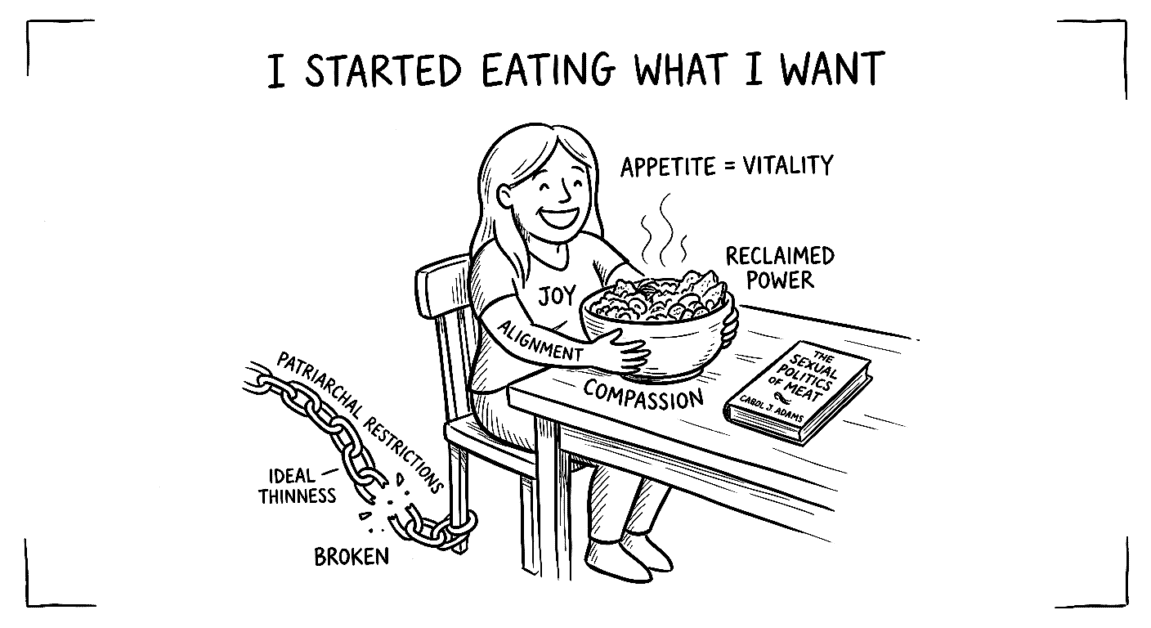
This cultural script runs incredibly deep. In her groundbreaking book The Sexual Politics of Meat, Carol J. Adams explores the historical, patriarchal links between the control of animal bodies and the control of women’s bodies. Historically, culture coded heavy eating and meat consumption as symbols of masculine power. Society expected women to keep their appetites tightly disciplined, passive, and minimized.
This intersection of feminism and animal exploitation becomes devastatingly clear when we look at how female animals are treated as mere reproductive commodities. In the dairy and breeding industries, their bodies, motherhood, and reproductive cycles are systematically controlled and exploited. To dive deeper into this specific connection, you can read the open letter from animals every caring person should read on our sister blog, which unpacks how deeply female suffering is woven into the fabric of animal agriculture.
Growing up surrounded by these unspoken rules, that patriarchal pressure translated into a silent battle with my own body. In high school, a heavy fog of depression and deep unhappiness trapped me. During this time, I developed an eating disorder. I desperately strived for a hollow ideal of thinness. I believed this look equaled worth and beauty. In that space, I completely sacrificed my internal health—both mental and physical. I did it all to achieve a socially approved, disciplined silhouette. My appetite became something to fear and control, rather than a natural source of vitality.
Veganism as a Radical Act of Reclamation
Breaking free from that trap meant rewriting my relationship with nourishment by choosing a vegan lifestyle. For me, veganism was never a new way to restrict myself. It was a radical act of liberation. Non-vegans and vegans alike can understand this choice as a reclamation of power. It allowed me to shift my focus entirely away from a toxic, multibillion-dollar diet culture. That culture intends to keep women small and distracted. Instead, I moved toward an ethic of deep compassion, justice, and respect for life.
Today, I eat whatever I want without any weight-loss restrictions. I treat food as a source of joy and as a way to align with my core values in veganism. Since making this shift, both my physical and mental health have drastically improved. Living in true alignment with my ethics brought a sense of peace I never thought possible. True strength and beauty come from reclaiming our appetites, honoring our bodies, and anchoring ourselves in radical self-acceptance.
3. Being Mindful of Toxic Masculinity and Feminine Strength
This journey toward authentic self-determination also extended outward. It forced me to become deeply mindful of the everyday dynamics of toxic masculinity. Simultaneously, I began to see the profound power of feminine strength. As a naturally shy person, navigating this terrain remains a continuous learning process.
Patriarchy creates environments where directly confronting toxic behavior carries heavy, intimidating risks. These include the fear of job loss, financial vulnerability, or threats to physical safety.
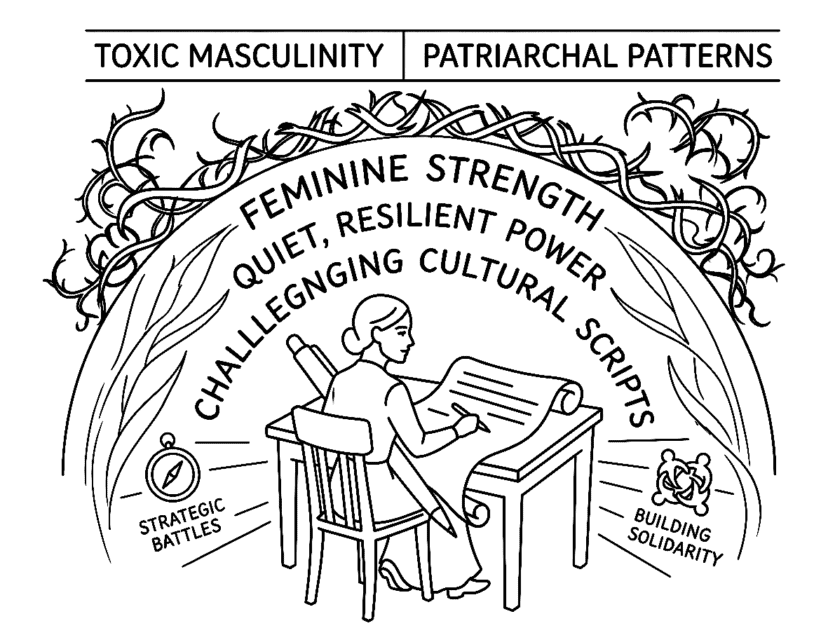
Because of this, I learned to choose my battles strategically. I accept that some systemic behaviors remain out of my immediate control. I am certainly not perfect in this department. However, I actively train myself to sharpen my awareness. I identify harmful patriarchal patterns when they occur. At the same time, I learn to recognize and honor the resilient, quiet power that women carry every day.
Finding Power in the Written Word
Shifting a deeply ingrained culture does not always require loud, public confrontation. Instead, it begins with changing our mindset through intentional, everyday acts of resistance. Sometimes that looks like an internalized recognition. It can be a quiet refusal to validate a toxic comment.
Other times, it looks like building solidarity. We can compliment another woman on her strength and lift her up. This matters immensely in a world that constantly tries to diminish her.
Many people share social media posts or engage in direct verbal confrontations. Those are common and valuable routes. However, I found my own power in the written word. Writing articles like this one allows me to explore the struggles we face deeply.
I can challenge harmful cultural scripts and highlight the authentic, multifaceted nature of female strength. This practice is my way of quietly but radically shifting the environment around me. It proves that we have many ways to fight for a fairer world. Using our unique voices to tell our truths remains one of our most impactful tools.
4. Taking My Interests & Passions Seriously
When the economic and social architecture is built to gatekeep legitimacy, it’s no surprise that women are pushed to keep their dreams small and contained.
For years, people told me that The Honest Whisper was “just a hobby.” The truth is, I started to believe them. I minimized my own work and treated it as a casual pastime. Society conditions women to view their creative and advocacy projects exactly this way. We live in a culture where men’s interests automatically receive validation and scale.
For example, look at how culture treats male hobbies. It is considered completely normal for a man who simply likes beer to turn that interest into a full-scale brewery career. He receives societal encouragement and institutional support along the way.
Yet, when women try to build platforms out of their deepest passions, people frequently belittle us. We are made to feel undeserving of pursuing our goals seriously. When the economic and social architecture gatekeeps legitimacy, women naturally feel pushed to keep their dreams small and contained.
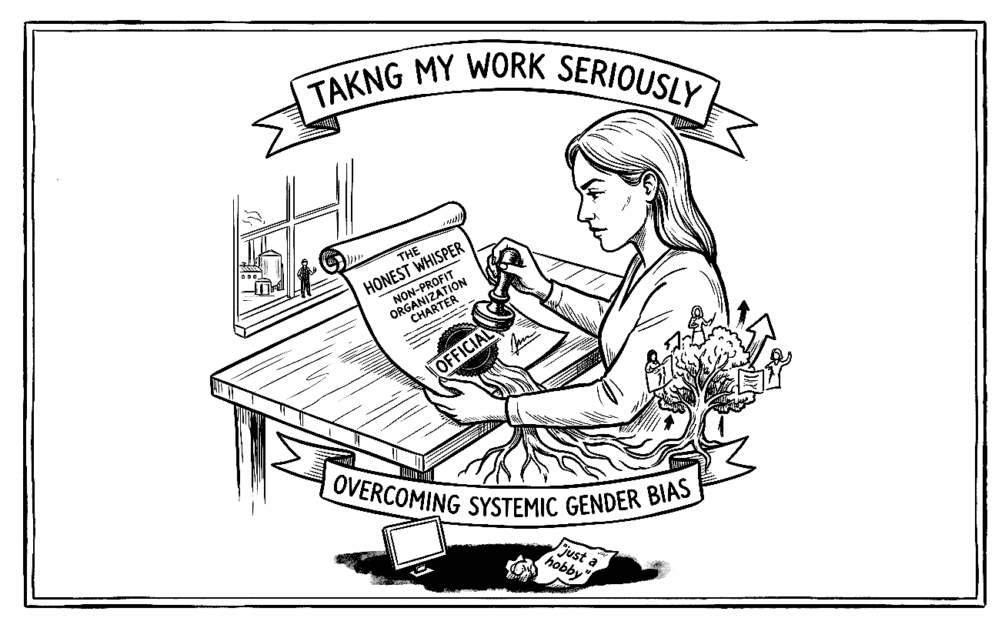
Overcoming Systemic Gender Bias in Entrepreneurship
This double standard is not just an internal feeling. It is backed by harsh structural realities. In Canada, women make up half the population. Yet, women majority-own only about 18% of small and medium-sized businesses. This data comes directly from the Women Entrepreneurship Knowledge Hub.
Furthermore, recent research from WeBC’s Understanding Loan Experiences report
reveals a massive gender lending gap. It shows that 28% of women business owners do not even apply for traditional loans. They skip the application simply because they expect a denial due to an entrenched systemic gender bias.
Realizing this structural barrier provided the exact catalyst I needed. I stopped waiting for permission. I gave my passion the spot on the shelf it always deserved. It took me a full ten years of second-guessing myself to finally make the leap. Reaching this milestone in 2026 taught me a profound lesson. It is never too late to reclaim your narrative and take up space.
Our passions are entirely worthy of validation, and by claiming that legitimacy, we set an example for other women that our voices are never “just a hobby”—they are powerful, essential tools for systemic change.
This motivation pushed me to officially register The Honest Whisper as a non-profit organization. Registration created a formal framework to invest my time intentionally, set clear goals for growth, and elevate my advocacy. Taking myself seriously also means showing up more robustly in the physical world. I am stepping out from behind the screen to participate deeply in the community. I do this by volunteering, studying, attending organizing meetings, and showing up at protests and vegfests.
5. Using Social Media in a Positive Way
For a long time, my relationship with social media felt incredibly exhausting. I used to view it as a giant popularity contest. It was a highly competitive digital space that frequently left me feeling drained. I often got caught up in toxic online arguments or read negative comments.
To be honest, I still do not particularly love using social media. It can be deeply consuming. It is entirely too easy to get trapped in a cycle of doom scrolling. That habit always leaves me feeling like my time was wasted.
Because of this, I consciously transformed how I interact with these platforms. Participating in online arguments is not something I do much anymore. I realized that adding fuel to the digital fire does not deserve my energy. I would much rather protect my peace.
Channeling that time into meaningful actions, like signing online petitions or showing up for my community, has been a healthier path for me. While I still catch myself doom-scrolling occasionally, I deliberately configure my feeds. Now, I am primarily exposed to content that aligns with my values and supports the people I appreciate.
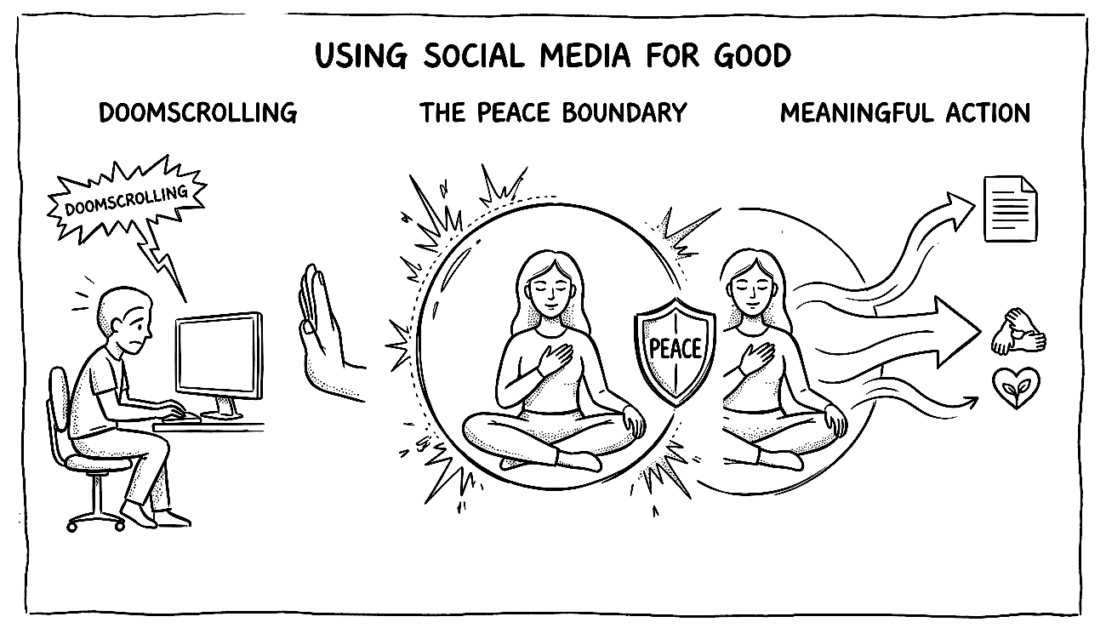
Protecting Boundaries and Avoiding Activist Burnout
To truly sustain this online advocacy and avoid severe activist burnout, I highly encourage taking regular social media breaks. Even stepping away and completely disconnecting for just a single day can radically reset your mental energy. It grounds you back in the physical world.
When managed with strict boundaries, social media ceases to be a corporate distraction. Instead, it becomes an incredibly effective tool for grassroots change. My online engagement remains 100% unpaid and non-profit. I do it completely of my own free will, without any external obligation.
I intentionally divide my digital energy to reflect what truly matters to me. About 70% of my presence supports others in veganism and animal rights activism. I offer solidarity and resources to those standing up for vulnerable lives. Another 20% focuses on studying, learning, and organizing meet-ups with like-minded individuals to foster real-world connections. The remaining 10% amplifies urgent campaigns to spark positive systemic change. By treating these platforms as a conscious choice rather than an aimless habit, I bypass the internet’s superficiality. I use it as a powerful, value-driven extension of my advocacy.
6. Normalizing Artistic & Emotional Expression
Alongside writing—which has always been my grounding, staple art form—I recently made a conscious effort to weave visual art back into my weekly rhythm. I do this through a dedicated art journal, sketching, and painting. I love art deeply. Yet, like so many people caught up in the daily grind of work and life, I allowed it to be crowded out for a long time. For me, creating is not a casual luxury. It is a vital form of therapy and emotional release.
However, I used to trap myself in a limiting mindset. I believed I could only create if I had perfect conditions. I thought I needed a hyper-private, completely quiet space where I could blend into the background.
Lately, I have been actively pushing past that comfort zone. I now carry a sketchbook with me into public spaces like cafes and parks. Choosing to create openly in public is, in itself, a feminist act of reclaiming space. We live in a culture where sitting in public to consume media or read a book is entirely normalized. Conversely, actively creating raw, visual art out in the open is often viewed as eccentric or attention-seeking—labels long used to keep women small. I want to help change that normalization. If we make art-making in public spaces normal, we might encourage others to step off the treadmill of constant consumption. They can then experience the therapeutic benefits of true creation.
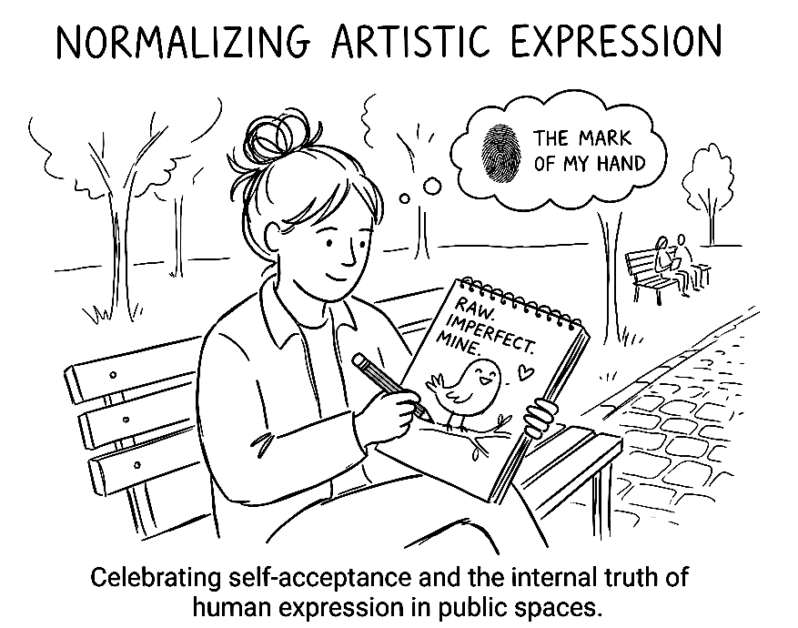
Art has its own form of expressing emotions, but I also wanted to start normalizing the actual act of expressing emotions more in my life. Now, this doesn’t mean I will be having my next crying session in a cafe. I will still be saving the more vulnerable expressions for spaces where I feel safe to be vulnerable (ideally). Rather, I will try to express feelings that I may have felt too shy or uncomfortable to express. For example, telling someone how deeply their advocacy inspires me, or being unapologetically vocal about the grief I carry for the non-human animals whose suffering is so often silenced by the world.
In a culture rooted in patriarchal and speciesist dynamics, vulnerability is frequently dismissed as a weakness, while emotional suppression is praised as “rationality” or professionalism. For a long time, I swallowed my outrage and my deep empathy just to keep the peace or to fit into spaces that demand we numb ourselves to injustice. Refusing to stay numb is a deeply feminist act. Suppressing our emotions doesn’t make us stronger; it just isolates us. By stepping past that initial discomfort—whether it’s expressing radical love and solidarity with fellow activists, or openly naming the institutional violence we fight against—I am reclaimed by my own empathy. Allowing myself to authentically speak my truth isn’t just a personal goal; it’s a quiet, feminist act of resistance against a system that relies on our silence.
Embracing Radical Self-Acceptance in Creative Work
Let’s be honest: I do not consider myself a “good” artist by conventional standards. A casual observer might look at my sketches and think a child could draw better. Honestly, maybe they could! But in a truly authentic creative space, technical perfection remains completely irrelevant. You do not have to be a master. You just have to express your internal truth, and that expression is more than enough.
Because my art holds deep personal meaning, it feels incredibly private and vulnerable. It is never a performance for public critique. Instead, I choose to share it strictly on my own terms. I show it only to the people I trust, or when I genuinely feel ready to open that window into my inner world. That vulnerability and personal agency are exactly what make it valuable.
In a digital landscape currently saturated with sanitized, hyper-polished AI-generated images, there is something deeply rebellious, courageous, and beautiful about raw human imperfection. At the very least, my sketches do not look like a corporate algorithm spit them out. They bear the undeniable mark of human hands.
Embracing our unpolished, authentic selves through radical self-acceptance is an act of defiance in a society obsessed with flawless execution. I want to see a world where more people feel empowered to create and share their beautifully imperfect art. This reminds us all that we do not need to be flawless to be profoundly worthy.
7. Doing Nothing
For someone like me, learning to truly do “nothing” is an ongoing battle. It requires an immense amount of conscious effort. We live in a capitalist, patriarchal culture that measures a person’s worth entirely by their output. This pressure falls with a unique weight on women. From a young age, society conditions women to be perpetual caretakers and organizers. We internalize the belief that if we are not being productive, helpful, or improving ourselves, we are failing.
Layered on top of that reality is the heavy emotional burden of animal rights advocacy. For vegans, the pressure to constantly do more, speak louder, and fight harder for vulnerable lives is incredibly intense. It often feels like every second spent resting acts as a betrayal of the cause. This mindset creates a toxic cycle of guilt that quickly leads to severe exhaustion.
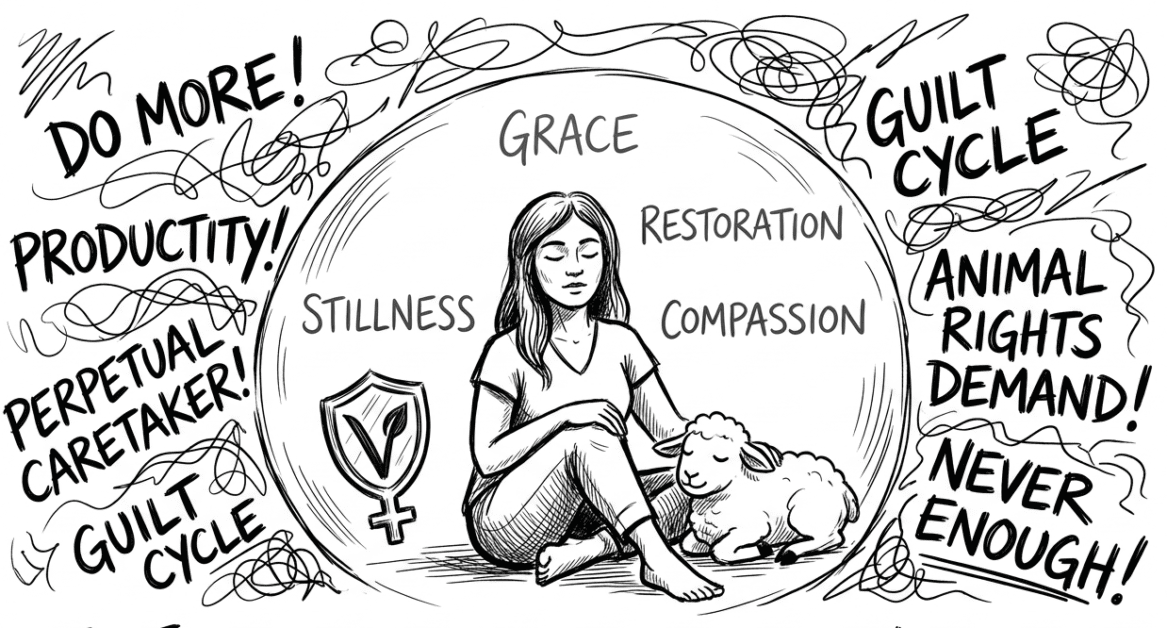
Finding Grace and Stillness Beyond Activism
Breaking away from that mindset means learning to be completely okay with accomplishing absolutely nothing. I allow myself periods of rest, whether that means an hour or an entire day. I do whatever my mind and body need. By learning to actively step into spaces where there are zero expectations of me, I have been able to achieve this the easiest. Allowing me to simply exist with my own thoughts.
This quiet stillness is not lazy. Instead, it serves as a vital form of emotional restoration. It gives me the necessary mental breathing room to reflect and extend grace to the community. In the silence of doing nothing, away from the constant noise of activism, I find the space to remember a crucial truth:
We are all doing what we think is best, and it is important to remember this in order to retain respect for other vegans.
Taking these moments to pause allows me to step back from the urgency of the movement. It helps me understand where everyone is coming from. This handles the judgment that can tear advocacy movements apart from the inside. Ultimately, protecting our own peace through radical rest is not a distraction from the work. It is the only way we can sustain our energy to keep fighting for a more compassionate world.
Our Quiet Acts of Resiliance
Unlearning decades of patriarchal and societal conditioning does not happen overnight. Reclaiming our natural appearance requires persistent, daily choices. The same applies to honoring our true physical appetites, establishing firm digital boundaries, and validating our deepest passions. Stepping off the treadmill of constant productivity and aesthetic perfection is terrifying. However, it remains the only way to build a life rooted in authentic alignment. In a culture that demands constant production and perfection, choosing to slow down and protect our peace becomes the ultimate act of radical self-acceptance.
We must choose compassion for ourselves alongside our compassion for the world. When we do this, we stop surviving under the weight of external expectations. Instead, we finally start living on our own terms. I hope these reflections challenge you to reflect on your own hidden habits. Always remember that you are entirely enough exactly as you are.
When a woman is forced to look away from her deep interests, her soul begins to starve.
– Clarissa Pinkola Estés (Women Who Run with the Wolves)
Like this read? Check out Relationship with Yourself: How to Build Healthy Relationships with Yourself to explore the many other ways to improve your relationship with yourself.
Brought to you by The Human Experience.


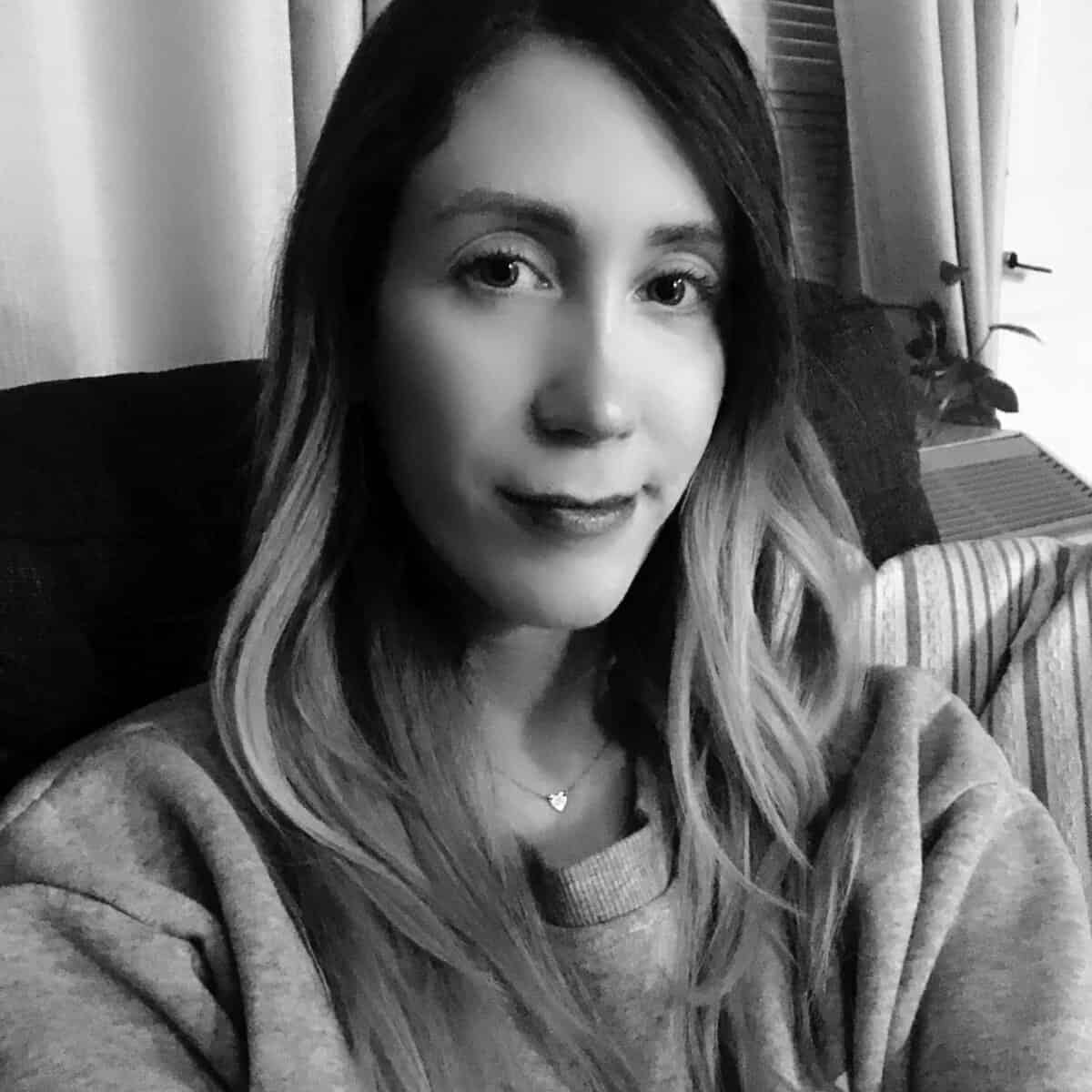
A Canadian animal rights activist, feminist, and mental health advocate with a background in Biotechnology. As a vegan for 10+ years and Founder of The Honest Whisper, she is dedicated to amplifying voices and creating a kinder world for all sentient beings.


