Last Updated on June 2, 2026
This article provides a comprehensive critique of the global infrastructure of specialized animal breeding, spanning from laboratory “models” to industrial agriculture and entertainment. It argues that the systematic control of animal reproduction is not a scientific necessity, but a systemic failure driven by corporate profit and “biological fallacies” that often stall human medical progress. By viewing these practices through an intersectional feminist lens, the text highlights the shared logic of oppression between the exploitation of animal bodies and the denial of human bodily autonomy. Ultimately, it advocates for a cultural shift away from domination, urging readers to engage with advocacy groups to dismantle these cycles and embrace a more ethical, sustainable future built on the principle of kinship.
- The Domination of Life: Why Anthropogenic Breeding is a Violation of Justice
- The Betrayal of the "Best Friend": Speciesism in Laboratory Research
- The Reproductive Politics of the Animal Body: Intersectional Feminist Animal Rights
- A Catalog of Human-Centric Breeding: Meet The Victims
- The Fallacy of Necessity: Alternatives to Animal Testing
- The Global Architecture of Responsibility: Our Collective Complicity
- The Vicious Cycle: A Failure of Systems, Not Individuals
- Taking Action: Breaking the Cycle of Control
- Getting Involved: Animal Rights Activism in Toronto
The Domination of Life: Why Anthropogenic Breeding is a Violation of Justice
The systematic breeding of non-human animals is not merely a technical industry, but a foundational pillar of patriarchal and anthropocentric domination. When we examine the ethics of animal breeding from a vegan feminist perspective, the act represents the ultimate “colonization of the body,” where the reproductive cycles of vulnerable beings are seized, manipulated, and commodified for human gain.
This is a reality I have seen firsthand. As a biotechnology graduate, I was taught that this violence was a “scientific necessity.” In my studies, I was told that draining animals alive—specifically for diabetes and insulin research—was a standard, common practice. We were instructed to be prepared for this and to simply accept its reality, effectively training us to suppress our empathy for non-human animals in favour of human-centric views.
This practice mirrors historical and systemic forms of oppression where the power to create life is reduced to a production line.
Beyond the intrinsic animal cruelty of bringing beings into existence solely to be used, breeding creates a cascade of systemic failures.
Genetically, we are engineering “biological prisoners”—creatures whose very DNA is a blueprint for chronic pain, skeletal collapse, or metabolic exhaustion.
Environmentally, the mass production of these specialized “monocultures” destroys biodiversity, pollutes water systems, and fuels the climate crisis.
Furthermore, breeding reinforces a hierarchy of worth, teaching society that a life’s value is contingent upon its “utility” or “aesthetic appeal” rather than its inherent right to exist. This system of life-by-design is a rejection of consent and a profound ethical failure that treats the miracle of birth as a commercial transaction.
The Betrayal of the “Best Friend”: Speciesism in Laboratory Research
At the heart of the breeding industry lies a profound and hypocritical speciesism—a prejudice that assigns different values to beings based on their “utility.” Nowhere is this more jarring than in speciesism in laboratory research, specifically regarding our relationship with dogs. We celebrate them as “man’s best friend,” yet this very bond is weaponized against them. Questoning dogs being “man’s” best friend is one I explore in depth in my article Dogs, Women’s Best Friend.
The industry specifically targets Beagles for laboratory breeding, not because they are “good models” for human health, but because of their docile and forgiving nature. The same traits that make them beloved companions—their willingness to trust and their refusal to bite back even when in pain—are the exact reasons they are exploited. In breeding facilities like MBR Acres or Ridglan Farms, thousands of dogs are “factory farmed” in barren cages, howling in a chorus of collective trauma.
This is the ultimate betrayal: turning a species’ capacity for love into a vulnerability for profit. It creates a schizophrenic moral landscape where a person can come home to pet their “family” dog while unknowingly taking a medication or using a product that was force-fed to a “laboratory” dog of the same breed. By categorizing animals as “pets” versus “research tools,” we aren’t following science; we are practicing a convenient form of moral erasure that allows us to exploit our “best friends” as soon as it becomes profitable to do so.
The Reproductive Politics of the Animal Body: Intersectional Feminist Animal Rights
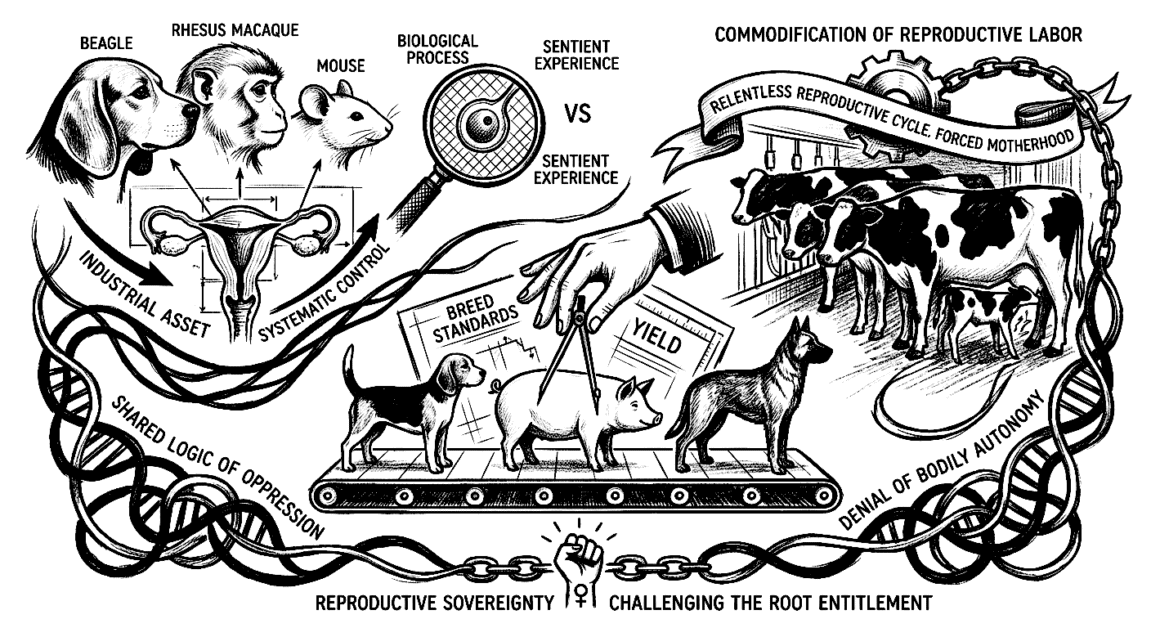
To view the systematic breeding of these animals through a lens of intersectional feminist animal rights is to recognize that the exploitation of the female body is a foundational tool of institutional control. Across all sectors—whether it is the “forced motherhood” of beagles in laboratories, the relentless reproductive cycles of Holstein-Friesian cattle, or the genetic “refining” of pedigree dogs—the female biological process is treated as an industrial asset.
This commodification mirrors historical feminist critiques regarding the denial of bodily autonomy and reproductive rights.When we selectively breed for “docility” in the lab or “yield” on the farm, we exert a patriarchal dominance that reduces living beings to biological machines. By challenging the human “right” to own and manipulate the reproductive lives of these species, we reinforce the broader feminist demand that no body—regardless of species—should be treated as a mere resource for another’s profit, aesthetic preference, or “progress.” This is a topic I explore in my other article Feminism for Animals (the open letter every caring person needs to read).
A Catalog of Human-Centric Breeding: Meet The Victims
This comprehensive overview examines the diverse ways in which human industries utilize selective breeding to reshape animal biology for utility, profit, or research. From a genetics standpoint, these programs often prioritize “hyper-traits“—such as accelerated growth or extreme docility—that frequently result in compromised health, reduced genetic diversity, and physiological fragility. These lists represent a global system of commodification that denies animals their autonomy and treats sentient lives as industrial inputs. By breeding animals for specific “uses,” we create a biological hierarchy where an individual’s right to exist is entirely dependent on their perceived value to human society.
Please note that this list may not include every species, and there are likely many more that are not listed.
Laboratory & Biomedical Research
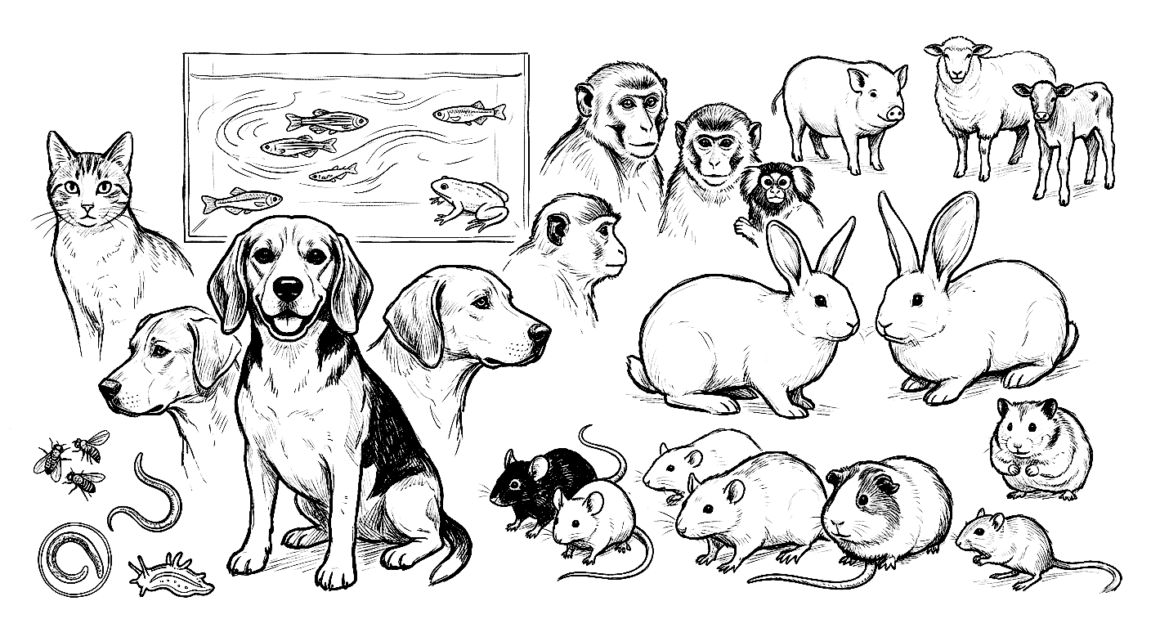
This sector breeds animals to serve as biological “proxies” for humans. The genetic focus is on creating highly standardized, predictable models to ensure that experimental data is consistent across different global labs. From a genetic standpoint, this often involves extreme inbreeding or the use of “knockout” technology to delete specific genes. From a vegan perspective, this is the ultimate reduction of a sentient being to a piece of laboratory equipment, where the animal’s entire existence is defined by the disease or chemical reaction it is forced to manifest.
- Canines: Beagles (the primary breed), Foxhounds, and Mixed-breed Hounds.
- Rodents:
- Mice: (e.g., C57BL/6, BALB/c, and CD-1 strains).
- Rats: (e.g., Sprague-Dawley, Wistar, and Long-Evans breeds).
- Other: Guinea Pigs (Dunkin Hartley), Syrian Hamsters, and Gerbils.
- Non-Human Primates: Rhesus Macaques, Cynomolgus Macaques (Crab-eating), Common Marmosets, and African Green Monkeys.
- Fish: Zebrafish (the most common), Medaka, and Fathead Minnows.
- Lagomorphs: New Zealand White Rabbits and Dutch Belted Rabbits.
- Ungulates: Yucatan Miniature Pigs, Sinclair Minipigs, Domestic Pigs, Sheep, and Calves.
- Felines: Domestic Short-haired cats (specifically bred for vision and neurological research).
- Amphibians: African Clawed Frogs (Xenopus laevis).
- Invertebrates: Fruit Flies (Drosophila), Roundworms (C. elegans), and Sea Slugs.
Agriculture & Livestock
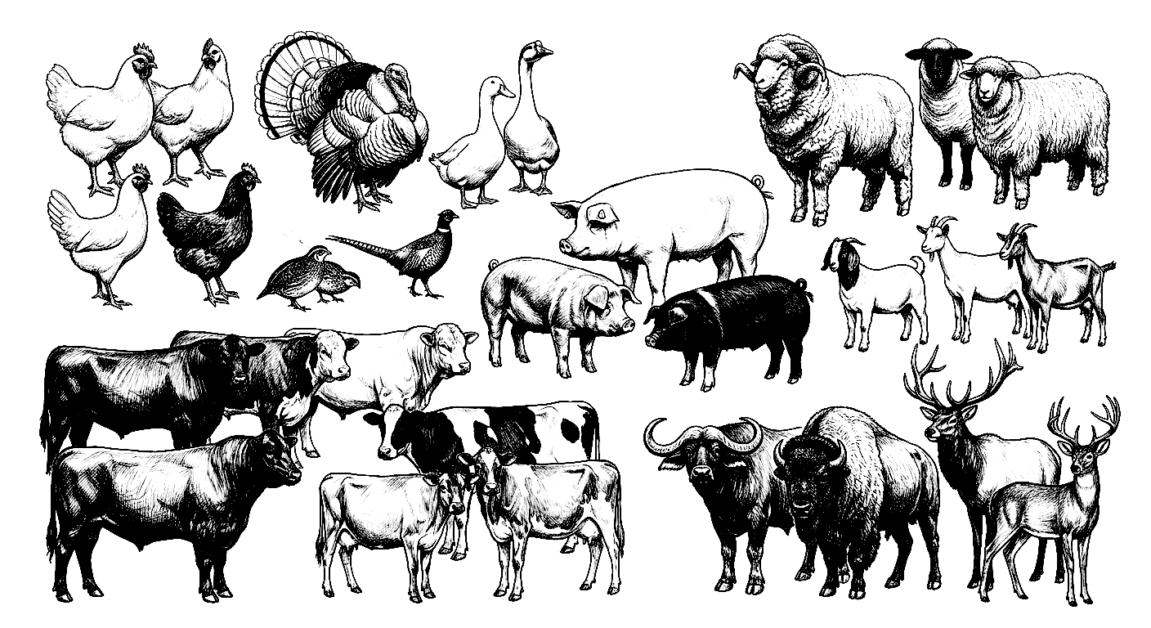
Agricultural breeding is driven by “production efficiency,” selecting for traits that maximize profit, such as rapid muscle growth or high-volume lactation. This has led to “biological acceleration,” where animals grow at rates their internal organs can barely sustain. Activists point out that this process creates “dead-end” animals who cannot survive without human intervention and are often slaughtered while still biologically juvenile. The genetic narrowing in this industry makes entire species vulnerable to mass disease outbreaks, often requiring heavy antibiotic use to keep the populations viable.
- Poultry:
- Chickens: Broilers (Ross 308, Cobb 500) for meat; White Leghorns and Rhode Island Reds for eggs.
- Turkeys: Broad-Breasted Whites (bred so heavy they cannot naturally mate).
- Other: Pekin Ducks, Geese, Quail, and Pheasants.
- Cattle:
- Dairy: Holstein-Friesian, Jersey, and Guernsey.
- Beef: Angus, Hereford, Charolais, and Wagyu.
- Swine: Large White, Landrace, Duroc, and Berkshire pigs.
- Sheep: Merino (wool), Suffolk (meat), and Cotswold (rare/specialized wool).
- Goats: Boer (meat), Saanen, and Alpine (dairy).
- Large Mammals: Water Buffalo, Bison, Elk, and Deer (venison farming).
Textiles & Fashion
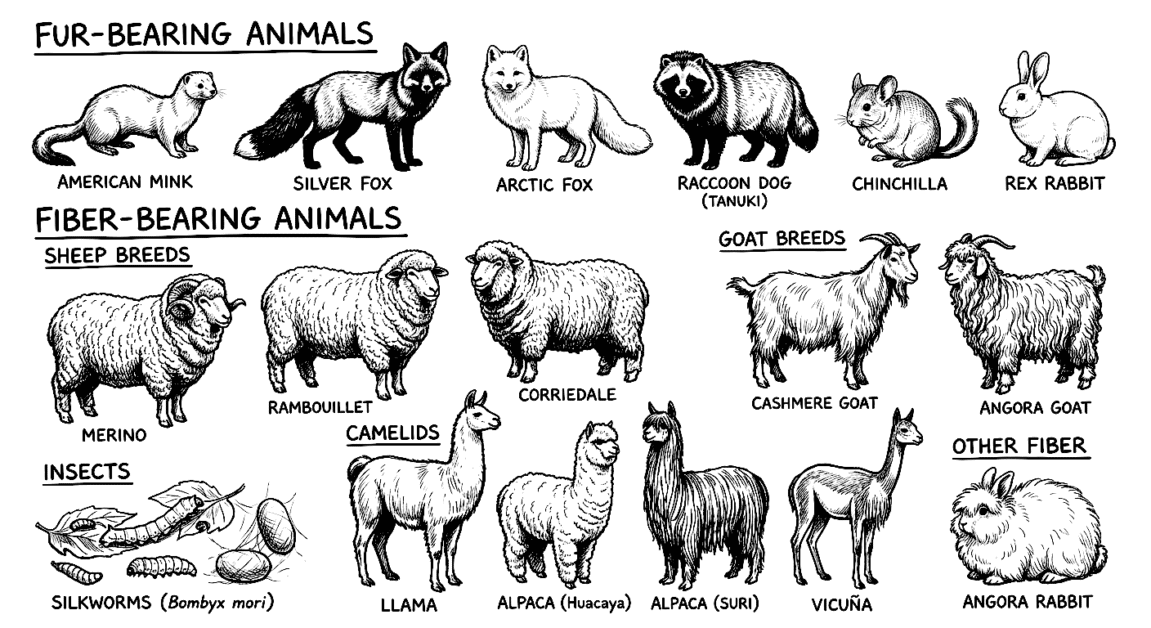
In the fashion industry, breeding focuses on the external aesthetic of the animal—the softness of its fiber or the color and density of its pelt. This often involves keeping “wild” species like mink and foxes in high-density cages, which is a significant animal rights concern because their genetic instincts (to roam, swim, or dig) remain intact while their physical environment is totally restrictive. For fiber-producing animals like sheep, breeding for “excessive skin” to increase wool yield often leads to painful health conditions like flystrike.
- Fur-Bearing: American Mink, Silver Fox, Arctic Fox, Raccoon Dogs, Chinchillas, and Rex Rabbits.
- Fiber-Bearing:
- Sheep: Merino, Rambouillet, and Corriedale.
- Goats: Cashmere goats and Angora goats (Mohair).
- Camelids: Alpacas (Huacaya and Suri breeds), Llamas, and Vicuñas.
- Other: Angora Rabbits.
- Insects: Silkworms (Bombyx mori).
Specialized, Industrial & Working Roles
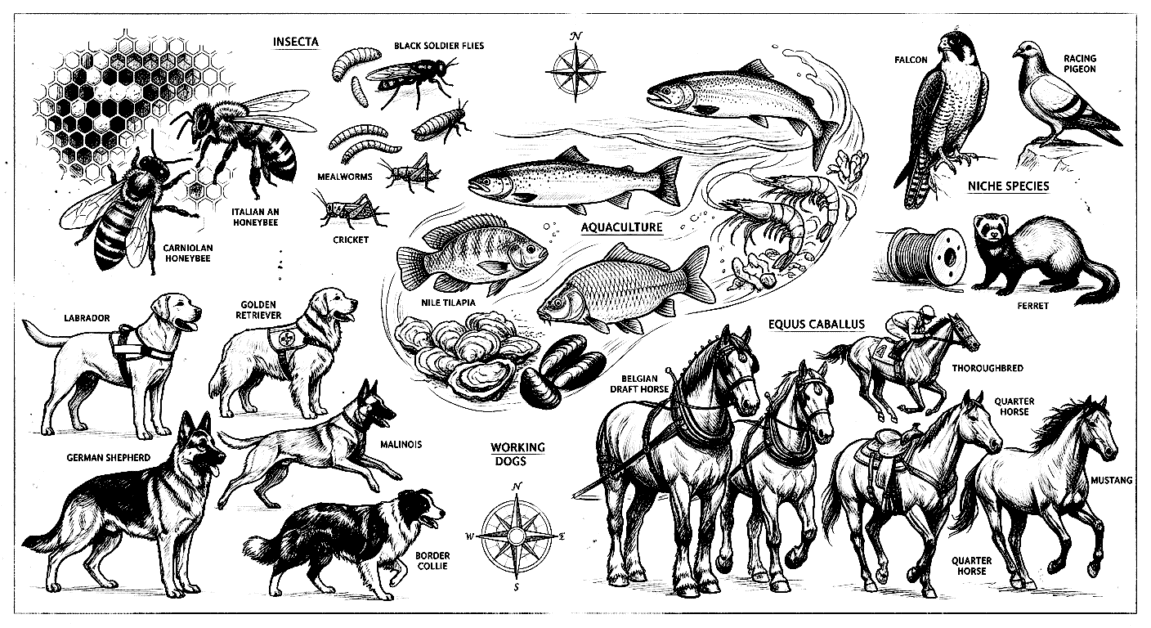
This category includes animals bred for their labor, their ability to provide “ecosystem services” like pollination, or their role in the growing insect-protein industry. Breeding for “workability” focuses on behavioral traits like focus and submissiveness, which activists argue is a form of psychological manipulation. From a genetic standpoint, breeding for specific performance tasks (like racing or heavy pulling) often results in structural issues, such as heart failure in racing pigeons or joint degeneration in draft horses.
- Insects: Honeybees (Italian and Carniolan), Black Soldier Flies (protein meal), Mealworms, and Crickets.
- Aquaculture: Atlantic Salmon, Rainbow Trout, Nile Tilapia, Carp, White-leg Shrimp, Oysters, and Mussels.
- Equine (Horses):
- Draft: Belgian Draft, Percheron, and Clydesdale (heavy labor/pulling).
- Sport/Work: Thoroughbreds (racing), Quarter Horses (ranch work), and Mustangs (managed wild breeding).
- Working Dogs: Labradors and Golden Retrievers (service/guide); German Shepherds and Malinois (police/military); Border Collies (herding).
- Niche: Falcons (pest control), Racing Pigeons, and Ferrets (cable running/pest control).
Conservation & Captive Breeding
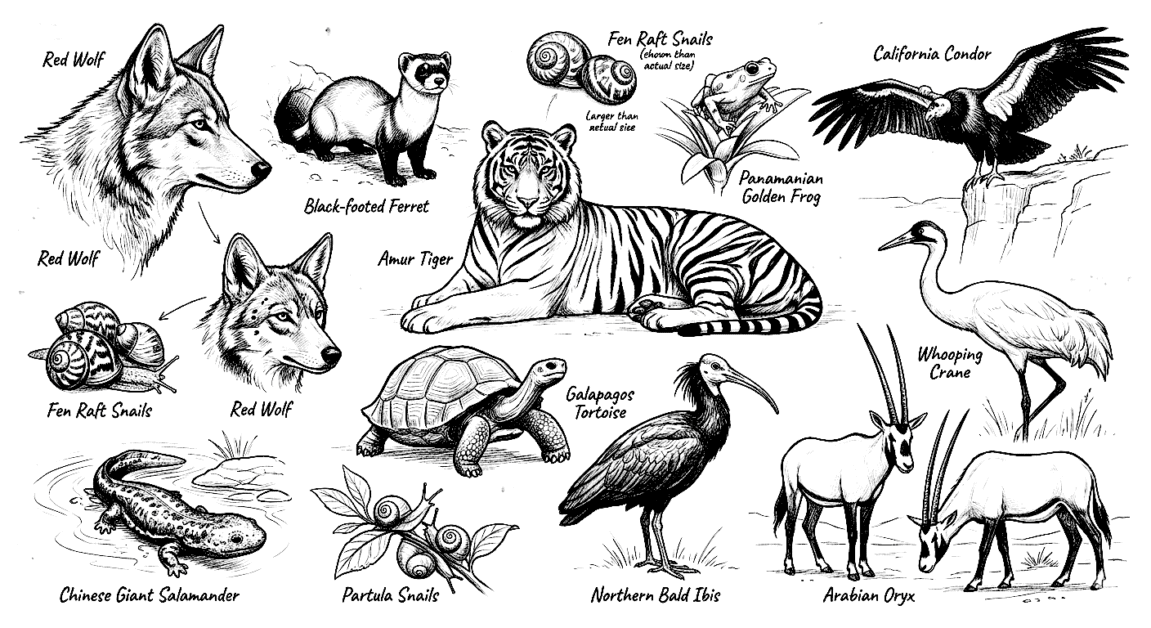
While often framed as an environmental necessity, captive breeding for conservation is scrutinized for prioritizing the survival of a “genetic line” over the welfare of individual animals. These programs often face the “bottleneck effect,” where a lack of genetic diversity leads to birth defects and weakened offspring. Activists argue that these programs can be “biological band-aids” that justify the continued destruction of wild habitats by suggesting that we can simply “breed more” animals in zoos to replace those lost in the wild.
- Mammals: Red Wolves, Black-footed Ferrets, Amur Tigers, Arabian Oryx, and European Bison.
- Birds: California Condors, Pink Pigeons, Northern Bald Ibis, and Whooping Cranes.
- Amphibians/Reptiles: Panamanian Golden Frogs, Chinese Giant Salamanders, and Galapagos Tortoises.
- Invertebrates: Partula Snails and Fen Raft Snails.
The Fallacy of Necessity: Alternatives to Animal Testing
The persistence of specialized breeding is not driven by necessity, but by a combination of industrial inertia and the prioritization of convenience over ethics. In the scientific realm, the reliance on animal “models” is increasingly viewed as a biological fallacy; because species differ fundamentally in their genetic expression and metabolic pathways, data from a purpose-bred beagle or mouse frequently fails to translate to human health. This “translation gap” leads to staggeringly high failure rates in human drug trials because a dog’s physiology is not a smaller version of a human’s—it is an entirely different biological system. Fortunately, we now possess viable alternatives to animal testing—such as 3D bioprinting, organ-on-a-chip systems, and advanced computational modeling—that can provide human-relevant data without the ethical cost of sentient suffering.
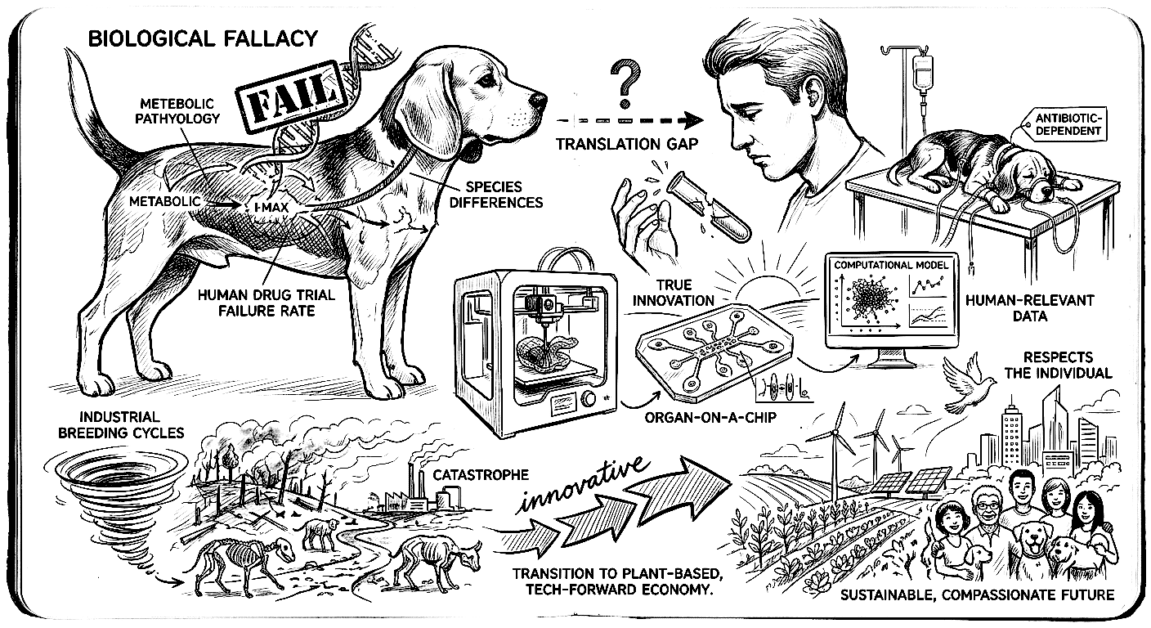
Furthermore, the environmental and biological harm caused by this system is profound. Breeding for “hyper-traits” creates fragile, diseased populations that require massive inputs of antibiotics and resources, fueling the rise of “superbugs” and the catastrophic degradation of our ecosystems. Far from being a “requirement” for human progress, industrial breeding is an outdated relic that stifles true innovation. It keeps us tethered to a destructive, resource-heavy infrastructure when we could instead be transitioning to a plant-based, tech-forward economy that respects the boundaries of nature and the rights of the individual.
Next-gen plant-based materials, such as mycelium leather and pineapple leaf fibers, provide a sophisticated, ethical alternative to animal-derived textiles. By utilizing agricultural waste and lab-grown tech, these innovations decouple high fashion from sentient exploitation and the heavy environmental toll of livestock farming. They offer a truly cruelty-free path forward, proving that durability and style can be achieved without compromising animal welfare or ecological health.
By maintaining these breeding cycles, we aren’t just harming animals; we are actively stalling a more scientific, sustainable, and compassionate future.
The Global Architecture of Responsibility: Our Collective Complicity
The moral weight of specialized breeding does not rest solely on the shoulders of the technicians in the labs or the workers on the farms; it is a global burden shared by all who participate in a society built on animal exploitation. We are all entangled in a web of complicity that transcends national borders, often outsourcing the most visceral cruelties to evade local regulations or public scrutiny.
A prime example is the equine industry, where horses are bred for the high-stakes world of racing or the aesthetic charm of carriage rides; once these animals are deemed “spent” or no longer profitable, they are frequently shipped across international borders to horse slaughterhouses in countries with laxer oversight, effectively “exporting” the final act of violence.
Similarly, the biopharmaceutical complex often utilizes a form of “toxic colonialism,” where wealthy nations and corporations outsource animal testing to underdeveloped or desperate countries. By offloading this “dirty work,” these entities can maintain a sanitized public image at home while exploiting the economic vulnerability and weaker animal welfare laws of another nation.
Whether through the medications we take, the entertainment we consume, or the global trade routes we support, we enable a system that treats sentient life as a borderless commodity, proving that as long as there is a demand for the product, the location of the cruelty is merely a logistical detail.
From the Lab to the Set: Witnessing the Pervasiveness of Exploitation
My firsthand experience in a bioanalytical pharmaceutical laboratory in Toronto solidified this for me. I saw the industrial storage of mini-pig blood and reviewed extensive toxicity reports for pharmaceutical drugs. But the exploitation didn’t stop at animals; the lab also tested on humans, offering cash for participation. This is a predatory practice that targets the financially vulnerable to do the “dirty work” of the medical complex.
This exploitation is so pervasive that it follows us into our art and entertainment. During my occasional modeling and acting gigs, I’ve seen how deeply embedded these systems are. I have requested vegan and cruelty-free makeup only to find it frequently unavailable on set. I even had to refuse participation in a “wedding scene” that utilized a horse-drawn carriage.
Whether it is a racing horse shipped across borders to a slaughterhouse when “spent” or a lab animal in a high-tech facility, the message is the same: it is everywhere, but you have to be paying attention. It may be hidden from plain view or dressed up in a palatable way, but it is silencing an important voice that needs to be heard: the animals.
The Vicious Cycle: A Failure of Systems, Not Individuals
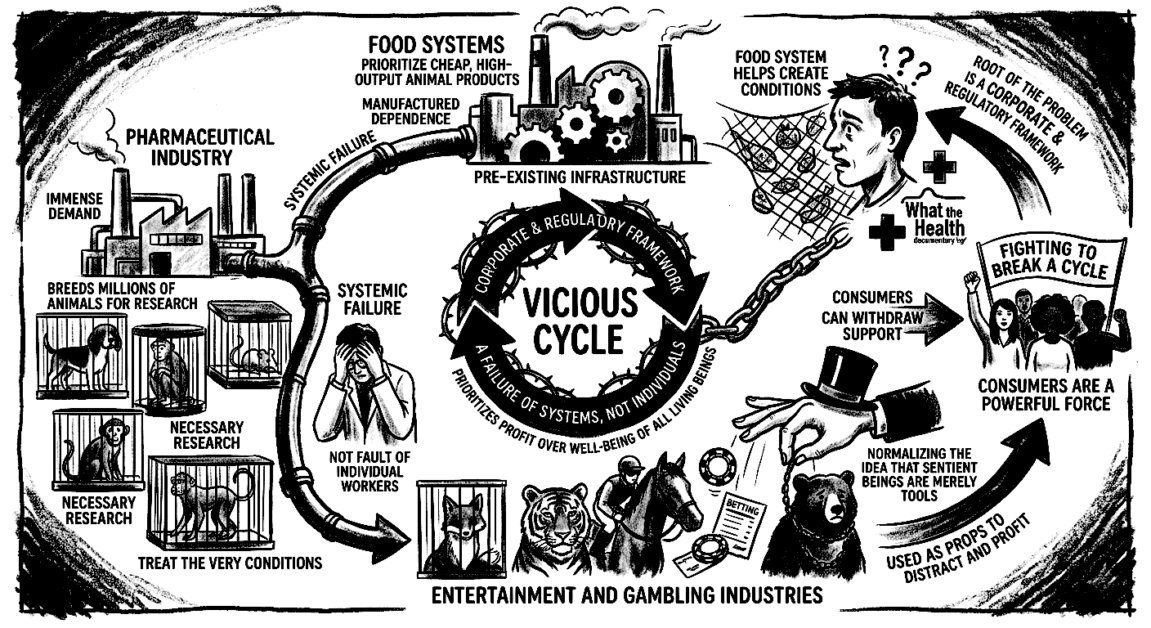
It is vital to recognize that this web of exploitation is a systemic failure, not the fault of individual workers or even the average consumer. Most people are born into a pre-existing infrastructure that hides the reality of its origins while fostering a deep, manufactured dependence. We are caught in a vicious, self-reinforcing cycle: our food systems prioritize cheap, high-output animal products that are linked to chronic health crises—a connection explored deeply in the documentary What the Health. As these dietary patterns fuel diseases like diabetes and heart disease, it creates an immense demand for the pharmaceutical industry, which then breeds millions of animals for the “necessary” research to treat the very conditions the food system helped create.
This cycle is further propped up by the entertainment and gambling industries, which use bred animals as props to distract and profit, normalizing the idea that sentient beings are merely tools for human utility. For many, the “demand” for these products isn’t a choice, but a byproduct of health struggles or a lack of accessible alternatives. While consumers are a powerful force in ending this cycle by withdrawing their support, the root of the problem is a corporate and regulatory framework that prioritizes profit over the well-being of all living beings.
We are not just fighting for animal rights; we are fighting to break a cycle of dependence that keeps us all unwell and complicit.
Taking Action: Breaking the Cycle of Control
Dismantling a global system of biological oppression requires a shift from passive concern to active resistance.
On an individual level, the most impactful step is to adopt a vegan lifestyle, withdrawing financial support from industries that view reproductive cycles as profit margins.
Beyond personal consumption, you can support animal sanctuaries that provide lifelong care for survivors of lab testing and agricultural exploitation, offering them the only thing the breeding industry denies: an existence for their own sake.
Politically, we must advocate for “Beagle Bills” and legislation that mandates the release of lab animals to rescues, as well as bans on the international transport of “spent” horses and livestock.
We must also demand transparency in pharmaceutical sourcing, pushing for non-animal testing alternatives like organ-on-a-chip technology and computer modeling, which bypass the need for “toxic colonialism” entirely. By shifting our culture from one of domination to one of kinship, we can begin to close the facilities that treat birth as a curse.
Getting Involved: Animal Rights Activism in Toronto
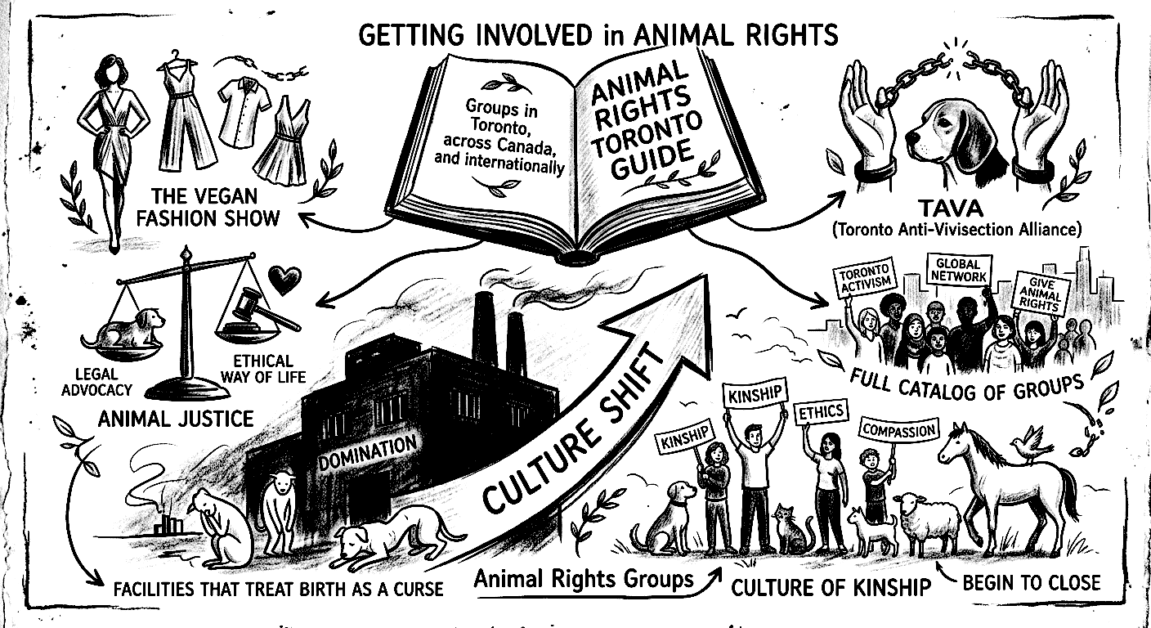
For a deeper dive into local activism, you can check out our other article to view a full catalog of groups in Toronto, across Canada, and internationally in our Animal Rights Toronto Guide. This guide explores groups such as The Vegan Fashion Show, TAVA (Toronto Anti-Vivsection Alliance), and Animal Justice, which are some of the many animal rights organizations helping give animal rights and offer a more ethical way of life.
Engaging in animal rights activism in Toronto and beyond allows us to shift our culture from one of domination to one of kinship. By withdrawing our support from these corporate frameworks and supporting legislative changes like “Beagle Bills,” we can begin to close the facilities that treat birth as a curse.
The animals of the world exist for their own reasons. They were not made for humans any more than black people were made for white, or women created for men.
– Alice Walker
Animal lover? Check out A Guide to Going Vegan For the Animals for more ways to show your love for animals. Brought to you by The Vegan Experience.



A Canadian animal rights activist, feminist, and mental health advocate with a background in Biotechnology. As a vegan for 10+ years and Founder of The Honest Whisper, she is dedicated to amplifying voices and creating a kinder world for all sentient beings.