Last Updated on March 27, 2026
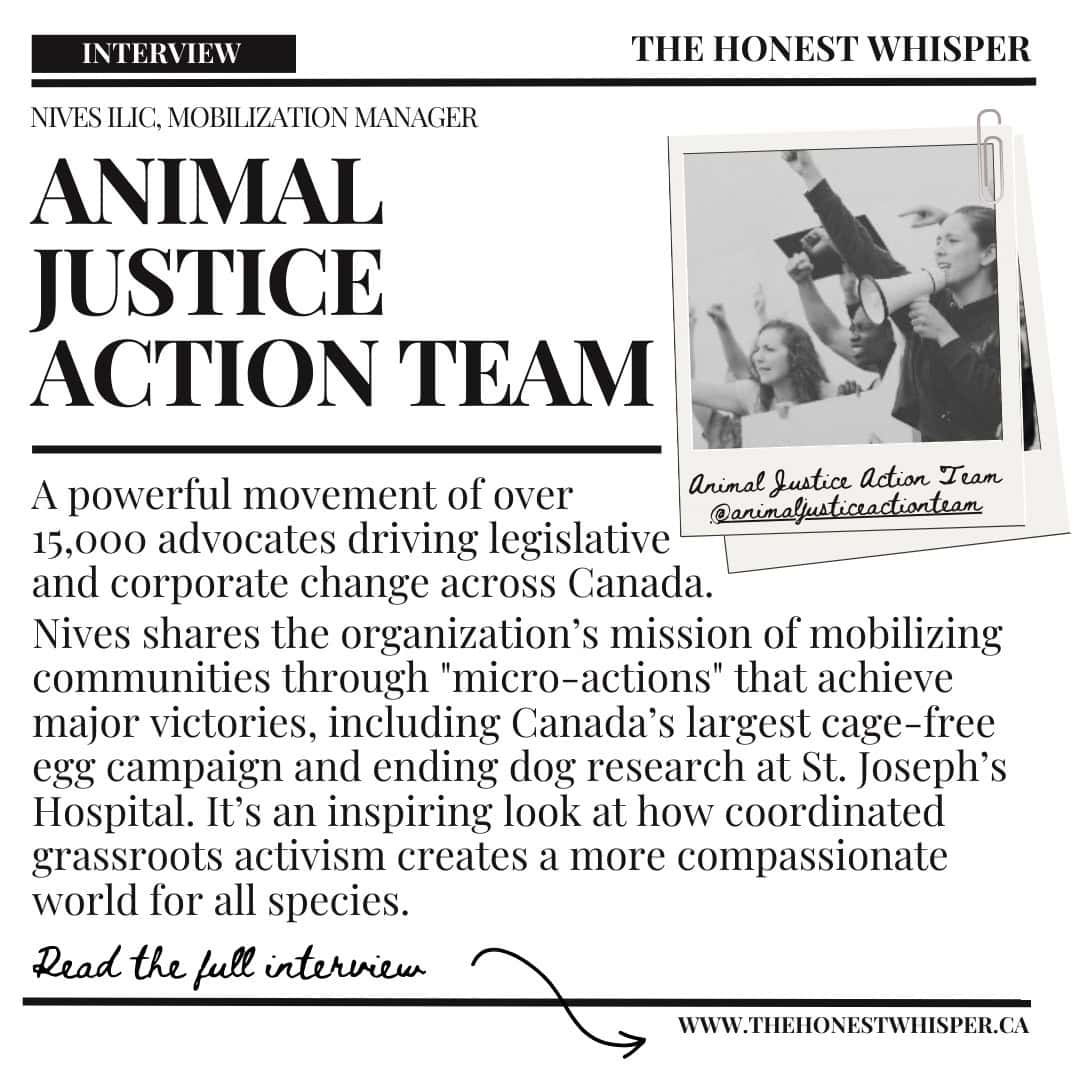
This feature is about the Animal Justice Action Team by Nives Ilic, highlighting a powerful movement of over 15,000 advocates driving legislative and corporate change across Canada. Nives shares the organization’s mission of mobilizing communities through “micro-actions” that achieve major victories, including Canada’s largest cage-free egg campaign and ending dog research at St. Joseph’s Hospital. The interview explores the deep connections between animal rights and broader social justice issues, emphasizing intersectionality and the importance of individual stories like Boogie the macaque. It’s an inspiring look at how coordinated grassroots activism creates a more compassionate world for all species.
Having trouble reading the digital interview?
This digital interview is best viewed using the full-screen button on a desktop computer. However, if you are on a mobile device, try viewing it horizontally.
If you are still having issues, you can read (or translate) the interview using the text excerpt below.
What is the program’s primary mission, and what are the daily ‘micro-actions’ the team takes to move closer to that goal?
The Animal Justice Action Team‘s mission is to mobilize online, on the ground, and within communities. This growing movement is influencing politics, corporate practices, media, and public opinion—demonstrating that coordinated action can create real, lasting impact.
Through the Animal Justice Action Team, members learn how to:
- Engage political representatives and influence public policy.
- Speak up effectively in media and public forums.
- Support corporate campaigns that reduce animal suffering.
- Lead and collaborate with like-minded advocates in their communities.
We also offer weekly emails with meaningful actions, monthly educational panels, workshops, and coordinated on-the-ground demonstrations.
What are the most significant milestones or ‘traction points’ the program has achieved since its founding?
In 2025, our members of AJAT (Animal Justice Action Team) have achieved incredible victories:
- Led Canada’s largest cage-free egg campaign, helping hens get a brighter future.
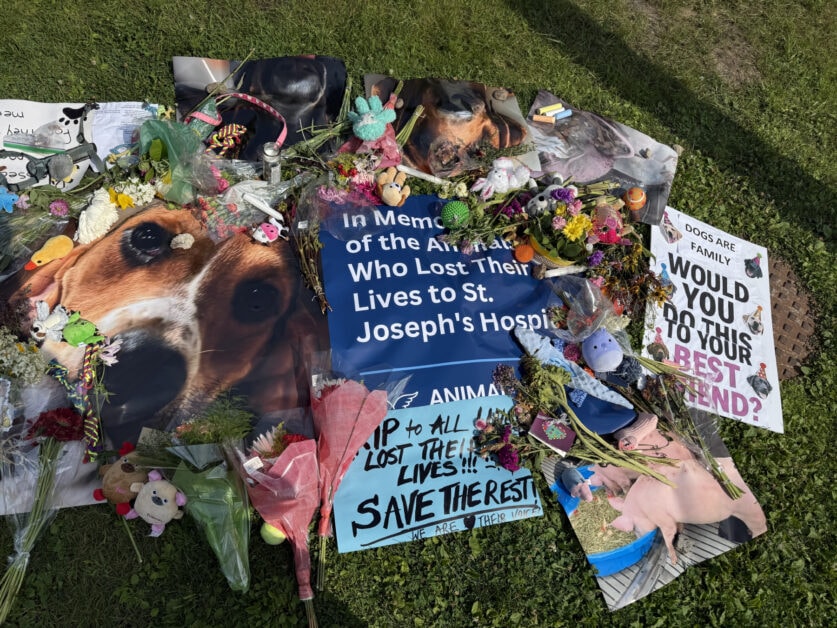
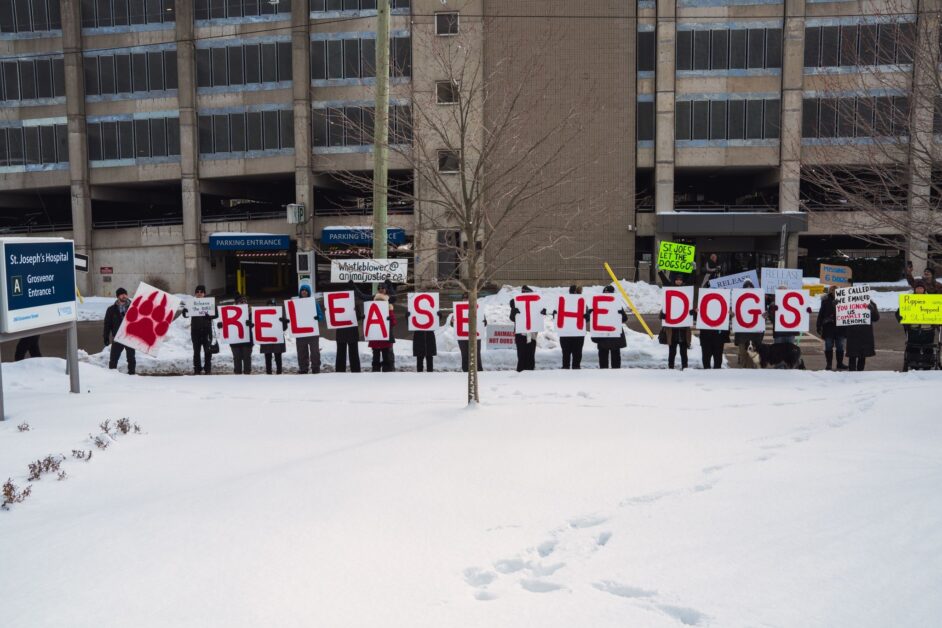
- Sent thousands of emails and held an on-the-ground demonstration that led to the end of dog research at St. Joseph’s Hospital.
- Hosted a nationwide vigil for horses in 11 cities, covered by six media outlets, highlighting the urgent need to end live horse exports.
- Stopped ground squirrel gassing in Winnipeg, protecting local wildlife.
- Published letters to the editors in major newspapers across the country, raising awareness of animal issues and shaping public opinion.
What are the most persistent challenges the program faces in today’s economic or social climate?
A major challenge we face is getting animal issues prioritized in the media and public attention. With so many urgent injustices affecting people—economic hardship, limited access to health care, unstable housing, or mental health struggles—animal rights often gets overshadowed, even though it is deeply connected to these broader social systems.
It can also be difficult for many people to take action for animals when they are themselves navigating systemic struggles. This is why intersectionality matters: effective advocacy recognizes the connections between human and animal well-being and builds campaigns that are inclusive, realistic, and supportive of everyone involved.
Reflecting on a recent program setback, what did it reveal about the team’s resilience or the organization’s adaptability?
When the latest federal election was called, the bill to ban live horse exports died in the Senate. Our community doesn’t allow obstacles to hold us down. Instead, we pivoted. AJAT quickly shifted strategies and is now working to achieve the same goal through regulatory changes. This experience revealed the team’s resilience: we can face political roadblocks without losing momentum, adapt our approach, and continue pushing for meaningful change for the animals we fight for.
In your communications, how does the program ensure that the individual stories and personalities of the animals (or people) remain the focus, rather than just treating them as statistics?
We make a conscious effort to highlight the individual stories of animals in our campaigns. For example, we continue to advocate for animals like Boogie, a Japanese macaque confined at Bervie Zoo—a roadside zoo in Kincardine, Ontario—where she spends her days alone in a small, barren cage, biting herself, pacing, and spinning in circles repeatedly. By telling stories like Boogie’s, we help people see that animals are individuals with their own experiences and suffering, not just statistics.
I have also written about these issues from a personal perspective. I wrote a couple of opinion pieces about my work on the St. Joseph’s campaign and the story of my own rescued former research dog, Mack, who spent six years in a laboratory before finally experiencing freedom.
You can read Nives Ilic’s Story of Adopting Former Research Beagle Mack on the London Free Press. If you, or someone you know, is interested in applying to foster or adopt a rescued beagle, applications can be submitted to The Beagle Alliance.

Who are the ‘unsung heroes’ within your program—human or otherwise—whose contributions are vital but rarely seen by the public?
Many people don’t realize that we have 18 Mobilization Leads across Canada coordinating demonstrations in their cities, speaking to the media, and leading national task forces that mobilize Canadians through political actions, social media campaigns, and published opinion pieces. Their work is critical to driving our campaigns forward.
How do you see the program’s work connecting to other social justice or environmental movements?
The systems that harm animals often harm vulnerable people as well. For example, workers on factory farms and in slaughterhouses frequently face dangerous conditions and significant mental health challenges. Many of these individuals have limited choice in the matter—they may be living in poverty or be migrant workers unable to seek other employment. I’ve seen a worker break down at a slaughterhouse, holding his head in his hands from sheer exhaustion. Moments like that make it clear that advocating for animals is inseparable from advocating for the people caught in the same systems of harm.
I also believe that the ethical principles at stake are the same: when we directly or indirectly harm animals, we increase the risk of harming vulnerable humans. Issues like bodily autonomy, protection from harm, and the right to live free from suffering apply across species.
The environmental connection is equally significant. Industrial animal farming is a major driver of deforestation, water overuse, and food waste, among other impacts. Addressing animal welfare, therefore, intersects with social justice and environmental movements, creating opportunities to advocate for a world that is safer, healthier, and more compassionate for both humans and other animals.
Can you share a story of a time when the program’s work inspired a ‘ripple effect’ of compassion in a supporter or a member of the community?
After the vigil for the dogs killed at St. Joseph’s Hospital, a member of the London community reached out to me. She told me that my words at the demonstration had inspired her to start a local group called Release the Dogs. That group continues to protest and demand the release of the two remaining dogs at Western University, long after the experiments at the hospital were shut down. Since then, she has become one of our Mobilization Leads, taking on leadership in multiple campaigns. Moments like these are a powerful reminder: you never know whose life—or whose activism—you might inspire.
How central are volunteers to the daily operations, and what is the strategic process for someone looking to get involved?
They are extremely important! The Animal Justice Action Team is a powerful collective of over 15,000 animal advocates taking bold action to drive change for animals across Canada. These members influence politics, corporate practices, media, and public opinion.

Sign up here to join the Animal Justice Action Team and start your meaningful activism journey for animal rights!
Follow the Animal Justice Action Team on Instagram @animaljusticeactionteam.
Love this interview? Check out more interviews or submit your own interview!


