
Last Updated on April 1, 2026
Discover the remarkable health benefits of a vegan diet. From improved heart health and weight management to reduced risk of diabetes and certain cancers, plant-based eating offers a wealth of nutrients and protective compounds. Explore how prioritizing fruits, vegetables, and legumes can transform your well-being and empower you to live a healthier, more vibrant life.
- The Power of Plants: A Nutritional Goldmine
- Plant-Based Diet for Heart Health
- Weight Management: Finding Your Natural Balance
- Reversing Diabetes with a Plant-Based Diet: Prevention and Management
- Cancer Prevention: A Powerful Defense
- Vegan Gut Health Benefits
- Beyond Physical Health: Mental and Emotional Well-being
- Making the Transition: Small Steps, Big Impact
- Transitioning to a Vegan Diet
- A Final Thought: Embracing a Healthier You
Building on the foundation laid in “The Vegan Experience: A Beginner’s Guide to a Vegan Lifestyle,” this article delves deeper into the health benefits of adopting a vegan lifestyle. It explores why many choose to go vegan for their health.
The word “vegan” often conjures up images of kale salads, restricted diets, and maybe even a slightly judgmental glare. But beyond the stereotypes, a growing number of people are embracing veganism for a powerful reason: their health. This isn’t about a fad diet or a fleeting trend. For many, choosing to go vegan for their health is a conscious decision to prioritize well-being, prevent disease, and feel their absolute best. While the ethical and environmental arguments for veganism are compelling, this post will focus specifically on the remarkable health benefits of a vegan diet. These benefits include ditching animal products and embracing a plant-powered life.
Let’s be clear: this isn’t about demonizing anyone’s current food choices. It’s about exploring the science-backed advantages of a vegan diet and offering a fresh perspective. This perspective involves what it means to nourish your body. Whether you’re a committed carnivore, a curious omnivore, or somewhere in between, understanding the potential health perks of plant-based eating can empower you to make informed choices about your own well-being.
The Power of Plants: A Nutritional Goldmine
One of the most compelling reasons people go vegan for their health is the sheer nutritional density of plant-based foods. The nutritional density of a plant-based diet is undeniable. In fact, the Academy of Nutrition and Dietetics maintains that appropriately planned vegan diets are healthful, nutritionally adequate, and may provide health benefits for the prevention and treatment of certain diseases throughout all stages of the life cycle. Fruits, vegetables, legumes, nuts, and seeds are packed with essential vitamins, minerals, antioxidants, and fiber. These nutrients are the building blocks of a healthy body. They support everything from immune function and energy levels to cellular repair and disease prevention.
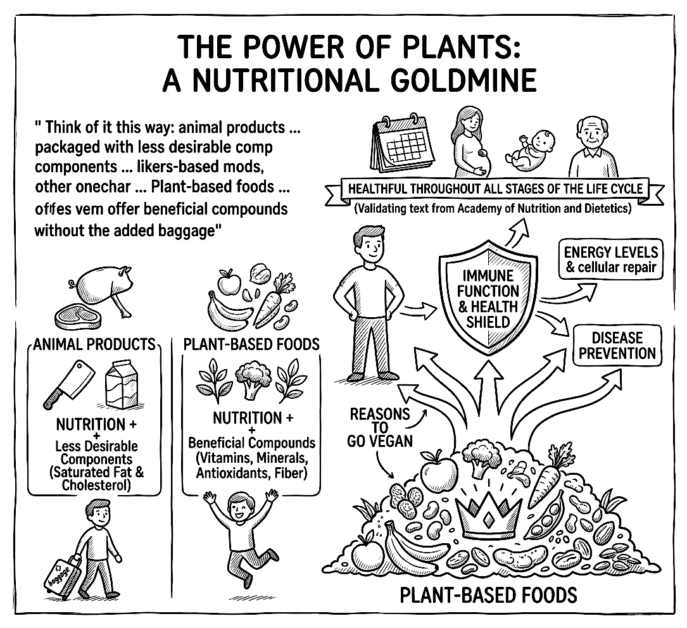
Think of it this way: animal products, while providing certain nutrients, often come packaged with less desirable components like saturated fat and cholesterol. Plant-based foods, on the other hand, offer beneficial compounds without the added baggage. This is a key factor why vegans often experience improvements in their health, such as heart health, weight management, and overall vitality.
While the nutritional density of a plant-based diet is undeniable, it is equally important to ensure you aren’t missing out on the ‘limiting’ nutrients often found in animal products. Many people who choose to go vegan for their health find that while they feel more vibrant, they may eventually struggle with maintaining optimal levels of B12 and Iron—especially busy women with active lives.
I’ve personally found that incorporating a professional-grade vegan protein as a daily supplement can act as a bridge. For instance, my go-to Vega One® All-in-One Nutrition Shake is a healthy and affordable option that provides a reliable source of these essentials alongside probiotics and greens. Using a clean-label vegan sport protein like this ensures that your ‘nutritional goldmine’ is complete, giving you the sustained energy to live your healthiest, most vibrant life.
Plant-Based Diet for Heart Health
Heart disease is a leading cause of death worldwide, and diet plays a significant role. A vegan diet is naturally low in saturated fat. It also contains zero cholesterol, which is only found in animal products. Studies consistently show that vegans have lower blood pressure and cholesterol levels. The American Heart Association’s 2026 guidance emphasizes that prioritizing plant-based proteins like beans, lentils, and nuts is one of the most effective ways to significantly reduce the risk of cardiovascular disease.

This isn’t just about what’s removed from the diet; it’s also about what’s added. Plant-based foods are rich in soluble fiber. This fiber helps lower your cholesterol. These foods also contain antioxidants to protect your blood vessels from damage. By prioritizing plant-based meals, you give your heart a powerful boost. For example, utilizing heart-healthy & gut-regulating ingredients like nuts and dates in our raw brownie recipe.
Weight Management: Finding Your Natural Balance
Many people struggle with weight management, and a vegan diet can be a valuable tool in achieving and maintaining a healthy weight. Plant-based foods are generally lower in calories and higher in fiber. As a result, you will feel full and satisfied for longer. This can naturally lead to reduced calorie intake without the need for restrictive dieting or feelings of deprivation.
Of course, it’s important to note that not all vegan foods are created equal. Just like any diet, a vegan diet can be unhealthy if it relies heavily on processed foods, refined sugars, and excessive amounts of unhealthy fats. However, when focused on whole, unprocessed plant foods, a vegan diet can be a delicious and effective way to achieve and maintain a healthy weight.
Reversing Diabetes with a Plant-Based Diet: Prevention and Management
Type 2 diabetes is a major health concern. Research suggests a vegan diet plays a significant role in both its prevention and management. Plant-based foods are naturally high in fiber, which helps regulate blood sugar. This improves insulin sensitivity and lowers your risk of developing the disease. For those already living with diabetes, this lifestyle often leads to better blood sugar control. The American Diabetes Association’s Standards of Care recognizes plant-based eating patterns as a high-quality option for managing blood glucose and improving insulin sensitivity. Consequently, it may even reduce the need for medication.

Cancer Prevention: A Powerful Defense
While no diet can eliminate risk, the American Institute for Cancer Research highlights that a diet rich in fruits, vegetables, and whole grains provides a powerful defense against cancer by reducing inflammation and supporting healthy cell function. The abundance of antioxidants, phytochemicals, and other protective compounds in plant-based foods is believed to play a crucial role in cancer prevention. These compounds work to neutralize free radicals, reduce inflammation, and support healthy cell function.
Vegan Gut Health Benefits
The gut is often referred to as the “second brain,” and for good reason. A healthy gut microbiome is essential for overall vitality. Research from The Microsetta Initiative found that people who eat 30 or more different types of plants per week have a significantly more diverse and healthy gut microbiome than those who eat fewer than ten. Plant-based foods are an excellent source of prebiotics, which are non-digestible fibers that feed the beneficial bacteria in your gut. This promotes a healthy and diverse gut microbiome, which is crucial for overall health and well-being.
Beyond Physical Health: Mental and Emotional Well-being
The benefits of a vegan diet extend beyond physical health. Many people report feeling more energetic, experiencing improved mood, and even noticing clearer skin after making the switch to a plant-based lifestyle. This could be due to a combination of factors, including improved nutrient intake, better gut health, and a sense of empowerment from making conscious choices about their health.

Making the Transition: Small Steps, Big Impact
If you’re intrigued by the health benefits of a vegan diet, you might be wondering how to get started. The good news is that you don’t have to make drastic changes overnight. Even small steps can have a significant impact. Start by incorporating more plant-based meals into your week. Try swapping out meat for legumes in your favorite recipes. Experiment with new vegetable dishes, or explore the world of plant-based milks and cheeses.
Many resources are available to help you transition to veganism. These include cookbooks, websites, online communities, and nutritionists. Focus on finding delicious, satisfying plant-based recipes you enjoy. For instance, one of my personal favorites is Vegan Recipes for a Kinder Lifestyle by Una Rose Vegan. The key is to make sustainable changes that fit your lifestyle
Transitioning to a Vegan Diet
While the health benefits of a plant-based diet are clear, the path to getting there looks different for everyone. Understanding how to navigate this change is key to making it a permanent lifestyle rather than a fleeting attempt.
Whether you are motivated by a sudden “lightbulb moment” or a slow, steady desire for improvement, your body goes through a natural transition period as it adjusts to a higher fiber intake and different nutrient sources.
Finding Your Pace
There is no “right” way to start, but there are distinct advantages to different approaches. Depending on your ultimate goal and values, you may choose one method over the other, or something in between.
- The Gradual Shift: Ideal for those who want to minimize digestive changes and slowly explore new flavors without feeling overwhelmed.
- The Sudden Switch: Often chosen by those who want to see rapid results in their energy levels or blood sugar management.
To help you decide which path fits your personality and goals, check out our deep dive into the difference between going vegan gradually and suddenly. We explore the pros and cons of each method and what to expect as your body begins its natural detoxification and recalibration process.
A Final Thought: Embracing a Healthier You
Choosing a vegan diet for health is a personal journey. It’s about prioritizing your well-being, nourishing your body with nutrient-rich foods, and discovering the incredible power of plants. Whether you’re looking to improve your heart health, manage your weight, prevent disease, or feel your best, exploring the world of plant-based eating can be a transformative experience. This is especially true during the festive season, when having a go-to list of favourite Canadian vegan holiday recipes can make your hosting duties feel effortless. It’s not just about what you’re giving up, it’s about all the amazing things you’re gaining – a healthier, happier, and more vibrant you.
“…it ended up that being vegan was the most correct way for me to treat my body.”
– Cynthia Erivo, Actress and singer-songwriter
Brought to you by The Vegan Experience from Our Origin Story.



A Canadian animal rights activist, feminist, and mental health advocate with a background in Biotechnology. As a vegan for 10+ years and Founder of The Honest Whisper, she is dedicated to amplifying voices and creating a kinder world for all sentient beings.


